• Blog
  • Shop
  • Podcast
  • Resources
  • YouTube
  • Archive
  • FAQ
  • About
  • Contact
  • Sign In My Account
Menu

The Gentleman Stationer

  • Blog
  • Shop
  • Podcast
  • Resources
  • YouTube
  • Archive
  • FAQ
  • About
  • Contact
  • Sign In My Account

From left: Opus 88 Koloro, seY Pen Tsugaru-Nuri Urushi, Bonecrusher7 Studios, Nagasawa Pilot Decimo Sengara Bay, Pilot Custom 845 Urushi in Prussian Blue.

What's In My Pen Case? Checking in After Pen Show Season on My Favorite 2026 Finds!

October 31, 2026

Formal “Pen Show Season” is mostly over, with the big shows (California, D.C., and San Francisco) in the books. It’s been a busy year, to say the least. T.G.S. has attended the California Pen Show, the Arkansas Pen Show, the D.C. Pen Show, the San Francisco Pen Show, and the Dallas Pen Show. I also took separate trips to the San Francisco Stationery Fest, plus a trip to Japan in May. We capped off October with our On The Paper Trail Live Event in Nashville! Since running a store - as well as our own recent event -has been time consuming to say the least, I haven’t yet had the opportunity to recap my favorite finds from my 2026 travels.

seY Pen Tsugaru-Nuri (left) next to my Bonecrusher7 Studio custom.

I plan to write more on Urushi pens in the future. I only have a small handful, but they are among my favorites.

The pace of my personal acquisitions has definitely slowed over the years. As I’ve narrowed the focus of my collecting, I sometimes even walk away from a show without a single purchase (even if those instances are few and far between :)). This year's acquisitions were fairly restrained, but they included some good ones. My 2026 Top Five to Date are:

  1. seY Pen Tsugaru-Nuri Fountain Pen. seY pen is a Japanese company that works with a collective of independent artisans to manufacture traditional Japanese urushi and maki-e fountain pens. I’ve admired their work for years, and after having had the opportunity to meet them at this year’s Dallas Pen Show I picked up this Tsugaru-Nuri fountain pen in a sky blue lacquer with different beige and brown shades blended in. Matthew Chen added an Architect nib when he came to Nashville.

  2. Nagasawa Pilot Decimo Kobe Gradation - Sengari Water Blue. I’ve picked up the annual Kobe Gradation Decimo for the past two years, with this year’s release inspired by the waters from Kobe’s Sengari Reservoir. The Japanese market gets multiple Pilot Decimo special releases every year - seemingly every independent pen store has its own release - but these Kobe Gradation models are my favorite. Of course I always opt for the FM (Fine Medium) nib wherever it’s available.

  3. Pilot Custom 845 Urushi in Prussian Blue. Pilot added to it’s Custom Urushi and Custom 845 Urushi lineup with this gorgeous dark blue lacquer finish, which they call “Prussian Blue”. The pen itself I acquired from my own shop (a hazard of the trade), but at the recent Nashville event I asked Matthew to turn the broad nib into a Kodachi. Yes, I have recently used this pen with shimmer ink. It works perfectly fine!

  4. Bonecrusher7 Studios Custom. I try to add a pen or two a year from an independent maker who I’ve never tried before. This year’s addition was a gorgeous translucent brown “Mocha Latté” swirled acrylic from Bonecrusher7 Studio, to which Matthew Chen added a medium stub (approximately a .6mm width). I love how well-balanced this pen is. Even though it can’t be posted, it fits comfortably in my hand and excels for longer writing sessions.

  5. Opus88 Koloro in Blue with Beige Ebonite Trim. This particular pen was provided to me as a demo by Opus88 when we decided to bring the line back into the shop, and it made its way into my general pen case. (Oops.) I’ve owned a few Koloros over the years, and I had forgotten how nicely the ebonite models work as a travel pen. (More on that below.)

My Nagasawa Sengari Bay Decimo, left, next to the Pilot Custom 845 Urushi in Prussian Blue.

I love how beige ebonite shows the grain on the material.

Guess what? The year’s not over. I’m headed to Japan again in less than two weeks for another adventure, and I’m in the process of putting together my travel kit. My Custom 845 in Prussian Blue, Ebonite Koloro, and Sengari Decimo are definitely coming with me. I may limit myself to three fountain pens on this trip, as I did last time, knowing that I will acquire at least one….

The Gentleman Stationer is supported by purchases from the T.G.S. Curated Shop and pledges via the T.G.S. Patreon Program. You can also come visit us at our physical stationery store in Nashville, Tennessee.
In Editorial, Pen Shows Tags 2026 Acquisitions, Pen Show Haul, Editorial
TWSBI Diamond 580 Stub Nib on Diamond 580 ALR Fountain Pen

Favorite Specialty Nibs That Don't Require a Nib Grind or Modification

September 19, 2026

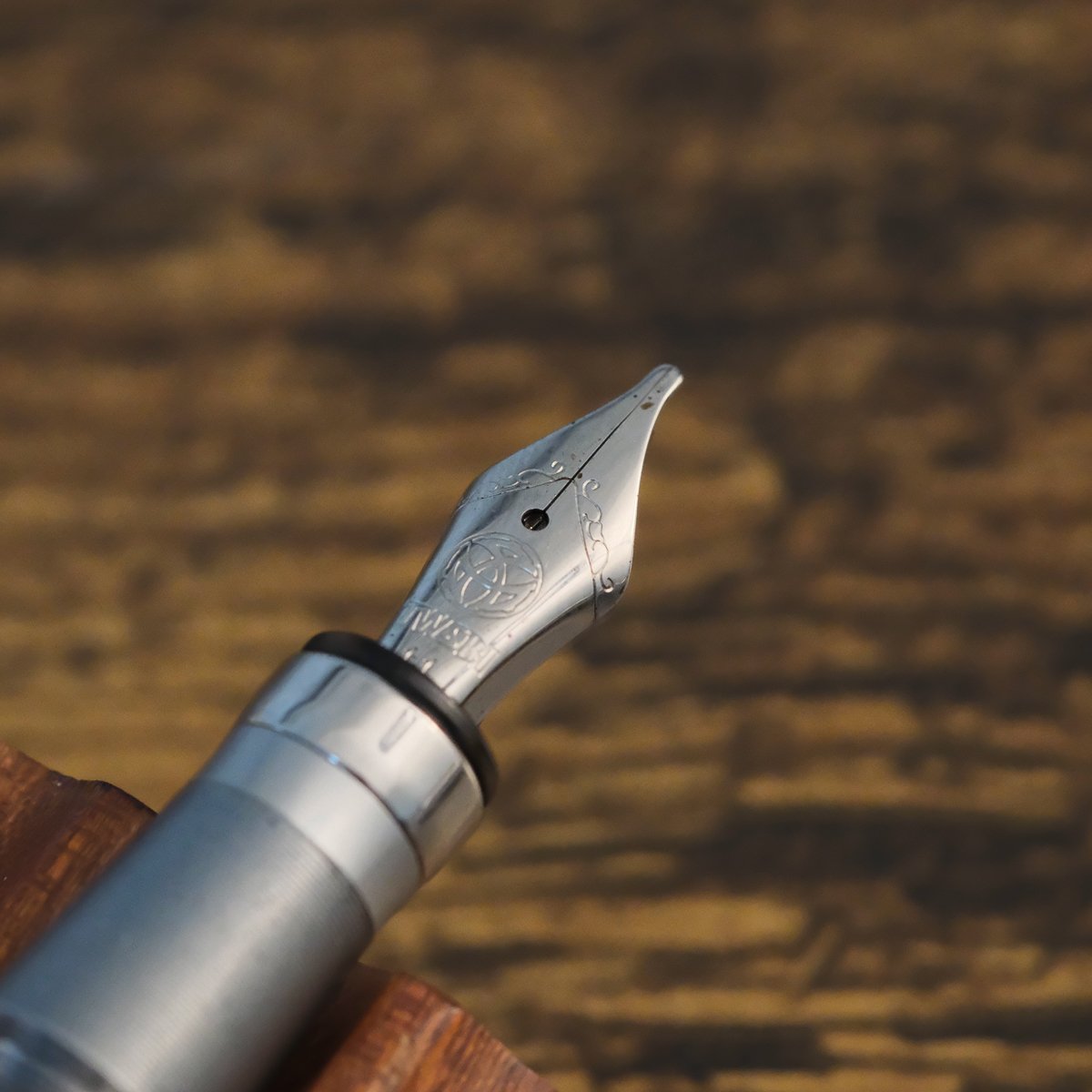
Many people are understandably nervous about having a nib modified by a nib grinder, whether that’s reducing a nib’s size from broad to medium, medium to fine, or changing the shape of the tipping entirely to something like a stub, architect, or kodachi. Nib modifications are irreversible. Once you’ve ground a nib into a new shape you can’t return it to its prior form without cost-prohibitive retipping, so it’s definitely wise to carefully consider any modification before you alter a favorite pen.

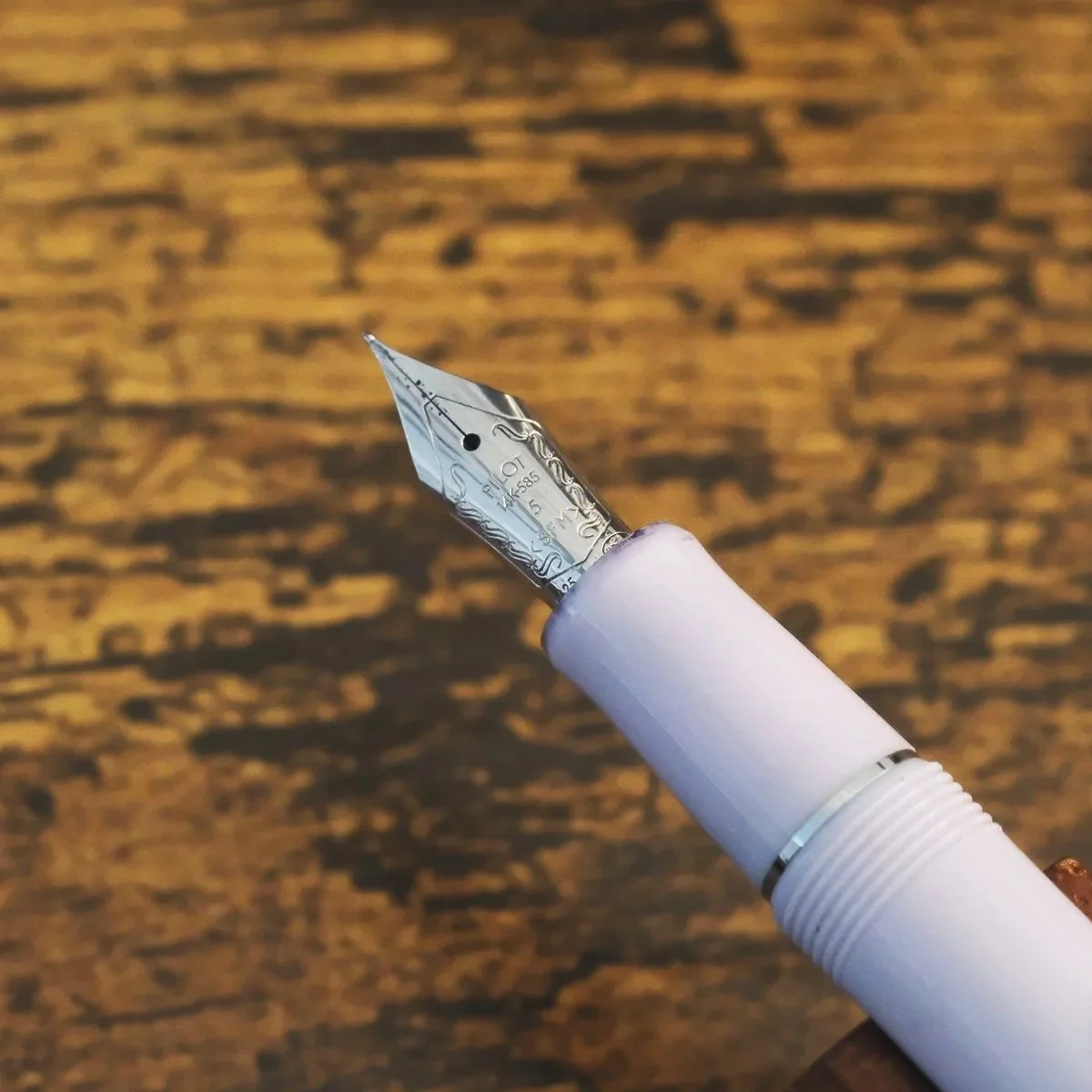
Pilot Lavender Fog Fountain Pen with SFM Nib

Look for the “SF”, “SM”, or “SFM” designation on Pilot nibs to find the relatively rare “soft” designation.

One way to test the suitability of a potential nib modification is to purchase a pen with a stock specialty nib. For example, if you’re considering having a nib ground to a stub or an architect, consider picking up a stock version and testing the grind/style of nib before modifying a pen in your collection. While stock nibs won’t be tailored to your personal handwriting - the main benefit of having a nib ground in person - they do give you an idea of how a style of nib writes and the opportunity for a longer “road test”. Pen shows and pen clubs can be helpful if people allow you to write a few lines, but I often need a week or more of continuous writing before I figure out whether a grind or nib style will work for me.

TOp “Stock” Specialty Nib Recommendations

  1. TWSBI 1.1mm Stub. Those who have never written with a stub or italic nib should try TWSBI’s 1.1mm stub nib. Available in nearly all their pen models, this stainless steel stub is smooth and delivers good ink flow. It’s an excellent way to explore stub/italic line variation at a lower cost. We’ve previously done comprehensive posts devoted entirely to stock stub nibs, which we had to break into Part I and Part II.

  2. Tom’s Studio Architect Nib. Stock architect nibs are difficult to do well because the smoothness of this grind depends heavily on your writing angle. The Tom’s Studio Architect starts as a double broad stainless steel nib, so it has a bit more tipping and is ground at a more forgiving angle than many architects. You can purchase this nib as a stand-alone add on to a Tom’s Studio pen, or you can find it pre-installed on certain pens in their Studio Pocket line.

  3. Pilot Kakuno EF or Pilot PO Nib. A lot of people think they want a needle-tip or “ultra extra-fine” fountain pen - until they actually write with one. Those of us who learned to write with ballpoint technology tend to apply far too much pressure, which can absolutely make a very fine fountain pen feel “scratchy”. (You are essentially pressing a needle into the surface of the page and trying to drag it around.) Before customizing one of your own pens, try an inexpensive steel-nib EF Pilot Kakuno, or a Pilot Custom 912 with a PO nib if you prefer gold. Both of these pens offer a sense of how most needlepoints “feel” on the page, including whether you need to adjust your own writing pressure in order for these nibs to be usable.

  4. Pilot “Soft” Series or “FA” Nibs. Considering having one of your gold nibs modified for flex or semi-flex? Many people don’t consider (1) how much ink these nibs put on the page, making them impractical for writing on lower-quality paper; and (2) how you need to slow your writing down when writing with a flex nib so that the ink flow can keep up. While the Pilot “Soft” nibs and the FA nibs are not necessarily true vintage-style flex, they will give you a sense of whether this type of wetter-writing pen is for you.

Note the wide downstrokes and narrower cross strokes on this Stub.

Nib grinds and modifications can be fun, and even addictive. That said, as I mentioned above it’s usually irreversible in the sense that if you don’t like the result, you’re left replacing either the nib or the pen. Stock nibs can be a less expensive (or at least less permanent) way to explore, and we regularly recommend these options and more for those looking to branch out from your standard round nibs.

Looking to learn more? Come see us in person at our Nashville shop or at a pen show! We will be at the Dallas Pen Show next week (September 25-27), and from October 16-18, we will be co-hosting the On The Paper Trail Live in Nashville weekend event. Both events have nib grinder opportunities, so be sure to buy your tickets in advance.

In Editorial, Top 5 Tags Nib Modifications, Nib Grinding, Pen Shows, Stock Stubs

Three Keeper Inks: Choosing Inks for 10 Fountain Pens

August 22, 2026

About a month ago, I undertook the “10 Fountain Pens” prompt challenge, in which I pulled 10 fountain pens from my collection that I would keep “if I could only keep 10.” Rather than just photograph them, I decided to ink or re-ink all 10 pens, since I hadn’t used several in quite some time. The inks I chose were a combination of new inks I picked up in my recent travels, potential new additions to the shop, and classic favorites that fit the “if I could only keep 10” theme. Today I’ll talk about 3 of the latter.

Note: This post is about the inks. If you’d like to learn more about the pens shown here, please see the original “10 Fountain Pens” post linked above.

Compare the dry Citrus Black shown here to the wet ink shown below.

Ink No. 1: Platinum Classic Citrus Black (Montblanc 146 with Medium Stub)

Sometimes a drier ink needs a wet-writing pen, and vice-versa. This Montblanc medium stub can be a challenge to use as an everyday writer given how wet the nib is, but with the Platinum Classic Series (which use iron gall), I can use this pen on all but the absolute flimsiest copy paper without significant bleedthrough or feathering. My favorite of the Platinum Classic inks is probably Citrus Black, which is a pale yellow when wet but dries to a dark green-gold. Iron gall inks are useful for taming ink flow in overly wet writing fountain pens, as they tend to be naturally dry. Don’t be fooled if they appear light or watery when first applied to paper - as the ink dries, the iron gall content bonds to the paper and not only darkens as it oxidizes but takes on a degree of permanence, so if your writing ever gets wet it won’t be entirely washed away.

Platinum Classic Citrus Black, when first applied to the page and still wet.

Note the small amount of “nib creep” (ink pooling on the end of the nib). This is a hallmark of some permanent inks, and does not affect how the pen writes. To learn more about permanent inks and how they might affect (or not affect) your pens, listed to On The Paper Trail Episode 13 where we have a fairly extensive discussion on ink permanence.

Ink No. 2: Maruzen Athena Blue (Pilot Custom 823 with Medium Blade Grind)

The Pilot Custom 823 is a favorite pen, but since it uses a vacuum-filling system it can be hard to clean thoroughly when changing ink colors. For that reason I rarely have this pen inked with anything other than a blue or blue-black ink, and it can be a challenge to find a variation that holds my interest. My current favorite is Maruzen’s in-house Athena Blue, which is a darker blue ink that flows extremely well, does not feather or bleed, and is permanent. How permanent? I ran a sheet of paper under the faucet for a full minute and the ink barely ran at all. The downside? You can only get this ink at the Maruzen shops in Tokyo, Japan, and they don’t sell the ink online.

The Maruzen Athena Blue doesn’t dry to as vibrant a shade of blue as the Taccia Ruri, discussed below, but on the other hand it flows well and is permanent.

Ink No. 3: Taccia Ukiyo-e Hiroshige Ruri (Pelikan M800 with Medium Perspective Grind)

Another blue ink? You bet. I’m a huge fan of the Taccia Ukiyo-e line, and while most of those inks tend to be on the muddier, subtler side, my personal favorite is Hiroshige Ruri, a vibrant blue. Taccia inks have a balanced flow works well in most pens, dry relatively quickly, and have some of the absolute best box artwork in the business. I tend to never save packaging, but I still have all my Taccia boxes.

While this particular ink can sheen red on certain coated papers, the sheen does not overwhelm the blue and importantly, the ink still dries relatively quickly with little smearing.

Are you interested in learning more about pairing pens and inks, including how to adjust the writing experience by switching up your ink? In the latest episode of our Podcast (On The Paper Trail, Epsiode 14), Lisa Vanness and I discuss how pairing the right ink with a “problem” pen can turn a pen you never use into an everyday workhorse. While changing ink and paper can’t fix all problems (sometimes you need a grind or a nib adjustment), you’d be surprised at how far it can take you. In any event, the never-ending quest to find the “perfect” ink for favorite pens is just plain fun.

The Gentleman Stationer is supported by purchases from the T.G.S. Curated Shop and pledges via the T.G.S. Patreon Program. You can also come visit us at our physical stationery store in Nashville, Tennessee.
In Editorial, Ink Reviews Tags 10 Fountain Pens, Ink Review, Favorite Inks, Editorial
Comment
Roterfaden Taschenbegleiters A5-A4

Pen and Stationery Shows are a great way to compare sizes and materials in person, and to learn how different systems work.

5 Considerations When Choosing a Notebook System (2026 Edition)

August 1, 2026

Next week is the D.C. Pen Show, and while I’ll be sharing table space with our friends at Vanness Pens, as we do every year, I’ll also be downstairs in the pen lounge hanging out and teaching, including my usual class on notebook systems. By “notebook system”, I’m referring to an organizational system that uses a cover to hold multiple notebooks, refills, and/or other accessories designed to work in combination. Brands that most people are familiar with include TRAVELER’S Company, Plotter, Roterfaden, Lochby, and others.

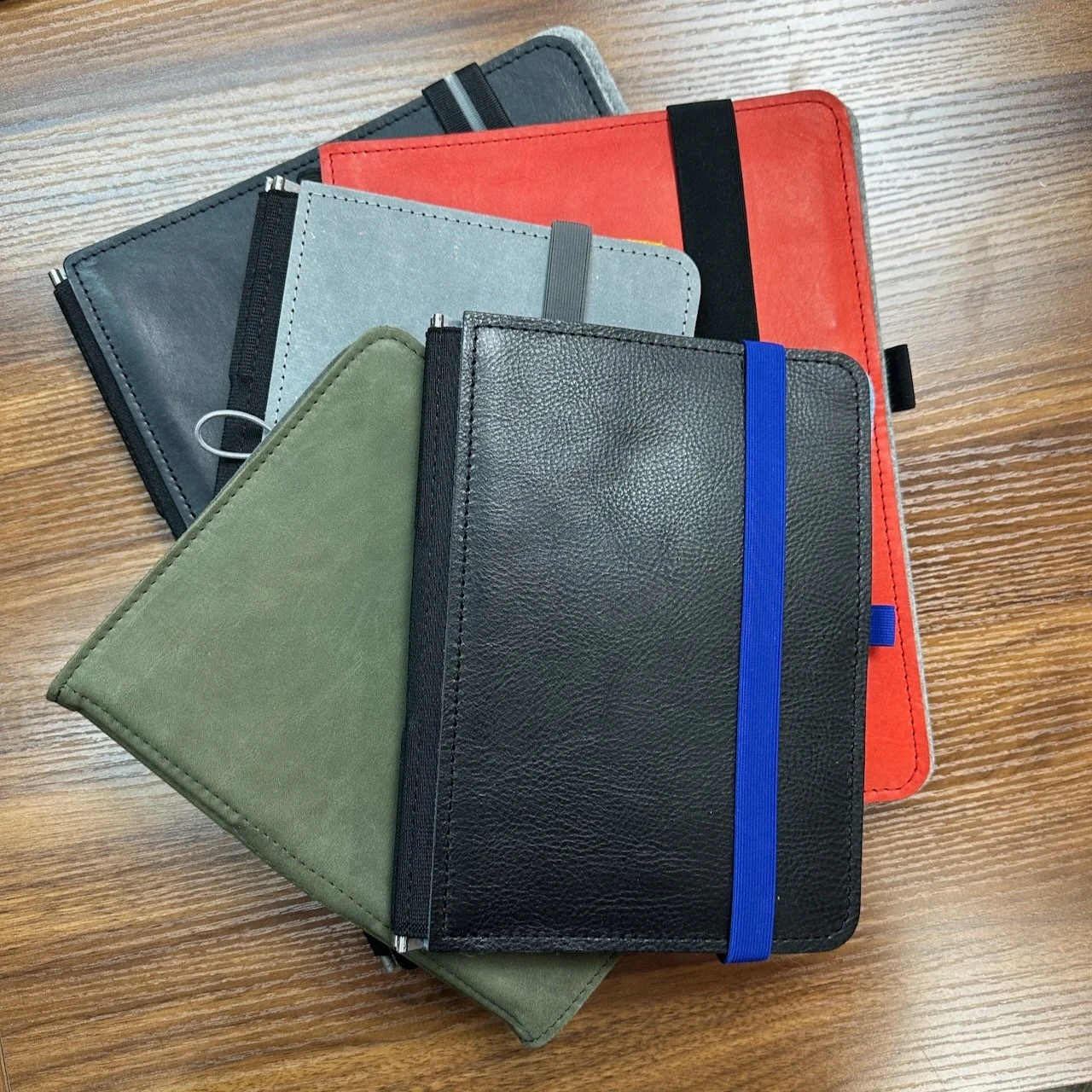
Typically when I teach this class I walk through the major types of systems and how each one works, along with some personal examples about how I’ve used different options over the years. Discussions can range from cover materials to bindings to refill sizes. I bring samples to pass around the room, and if you’ve been considering a specific brand, it’s a good way to get some hands-on experience before you make what can be an expensive purchase.

A few different brands that I may have on hand in D.C.

For those who can’t attend the class/seminar in person, please do check out the informational resources on Notebook Systems that we maintain on the site. As my own understanding of these systems evolves, and my own use changes, I also like to periodically offer my own thoughts and recommendations on how to get started. For 2026, here’s what I typically advise when people come to see me at a show or in the shop:

  1. Practicality over aesthetics. Choose a system based on your actual needs, not what you think your needs should be (or what social media tells you your needs should be). For me, there are lots of systems out there that I think look really cool, but which don’t align with how I work and organize information. The best notebook system is the one you will use, and that you won’t struggle with incorporating into your everyday life.

  2. Start slowly. Pick the one system you think will work best for you, and use it for a while to see if there are any holes in your workflow or organization. Add accessories as you need them, which helps to control costs. Try to avoid buying multiple new systems at once and testing them at the same time, as this prevents you from diving deep enough to understand how each system works.

  3. That said, don’t be afraid to eventually use more than one system. I personally use a combination of different notebook systems, because I’ve found that each fits better in a different area of my life. The key is to be intentional about how you add things.

  4. Universal sizing is almost always better than proprietary. Beware of companies that try to sell you an expensive cover where the only refill that fits is the notebook that company sells. If that company goes out of business, or you discover you don’t like the paper, you end up having to make your own refills or start over. Check measurements carefully and if at all possible choose standard A5 or B6 sizes or the slim equivalents of the same. Height is more important than width, especially with bound refills, because a notebook can usually be trimmed down to a narrower width, but cutting a notebook across the binding to make it shorter can cause it to fall apart.

  5. It doesn’t have to “look pretty.” My notebooks are not Instagram or Tiktok-ready, which is why you don’t see me post pictures of them all that often. If you enjoy doodling or decorating the margins and headers, by all means do that, but don’t feel intimidated into not trying a specific system because “I could never make look like so-and-so.” (Take it from someone who has followed the stationery influencer world behind the scenes for a very long time - many of those notebooks you see displayed on social media accounts never actually get used beyond layouts for social media posts.)

The Gentleman Stationer is supported by purchases from the T.G.S. Curated Shop and pledges via the T.G.S. Patreon Program. You can also come visit us at our physical stationery store in Nashville, Tennessee.

You aren’t going to find any stamps and stickers in my notebooks, which don’t make great content. :)

In Editorial, Notebook Review, Pen Shows Tags Notebook Systems, DC Pen Show 2026, Pen Show Prep

Wonder how I manage this chaos at shows and meetups? Mostly I don’t, but here’s how I try!

What's the Best Everyday Stationery Bag? My Own Considerations and 5 Options for Pen Show Season

July 25, 2026

We’re gearing up for pen show and trade show season, and I’ve been fielding regular questions about bag and case options in advance of Stationery Fest in NYC, the D.C. Pen Show the following week, and the San Francisco Pen Show later that month. In between, I may also be attending NY Now and Shoppe Object, two large to-the-trade stationery shows in New York City. So let’s just say that “stationery carry” is on my mind. Here I’m going to walk through a handful of considerations when choosing a show bag (or just a stationery bag in general), and then I’ll discuss a few of my go-to options. This list is not intended to be exclusive, but rather to offer some ideas based around models I use regularly.

I rarely overstuff a bag like this anymore, but with a well-designed option like the Rickshaw Banzai Bag, you certainly can!

Key Considerations for a Stationery Bag

  1. Smaller Backpacks, Please. When you’re at a show, don’t be that person who carries the giant 40L backpack that slams into people, knocks over items on tables, and blocks peoples view. Just don’t. Some shows are actually imposing bag size limits. If you need a backpack, choose a smaller “day pack” size option that fits flat against your back. Even for everyday carry, you probably need a smaller bag than you think. When I have a bag that’s too big, stuff tends to shift and collect at the bottom and things get dinged up.

  2. Choose a Bag Tailored to What You Actually Carry or Plan to Buy at a Show. If you’re going to a show mainly to buy a few pens or have pens ground, you can fit a LOT of pens into a very small bag, and you can even get away with carrying a small portfolio-style pen case or clutch. Tote bags are great if you’re shopping for lightweight items like washi tapes and other accessories. I’ve done pen shows with nothing but a Rickshaw Sinclair and it was super liberating to ditch the backpack or messenger bag. Buying paper or larger items requires more planning and extra capacity.

  3. Comfort is Key. If you’re planning to carry heavy stuff (i.e., lots of paper), or if you’ll be out all day and need to carry snacks and a water bottle, choose a bag with a supportive strap. I cannot emphasize enough how heavy paper can get - try lugging it all over Tokyo in warm weather - and an ergonomic backpack was key to keeping the trip enjoyable.

  4. Organization and Protection. I personally prefer bags with multiple compartments and pockets, to keep my notebooks separate from my water bottle, pen cases, and everything else. It also helps me stay organized since I carry so many different types of things with me at any given time. For shows, I would emphasize protection - if you’re buying pads of paper or soft notebooks, a bag with a laptop slot or a padded interior will keep them from getting dinged up in transit if you aren’t staying at the show venue and can’t run them up to your room or out to your car.

I’ve really reduced my carry over the years, and have largely moved on from an “I must take everything” approach.

My 5 Favorite Stationery Bags and Cases for Pen and Stationery Shows

  1. Rickshaw Banzai Bag. Designed for pen people, this compact messenger/sling bag is unobtrusive and holds a surprising amount given its compact size. I like to carry this as part of a modular system with multiple Rickshaw cases including the Sinclair and Fillmore pen cases (discussed further below). For an even slimmer system that operates off this same concept, the Lochby Field Sling is designed to carry a notebook, a pen case, and maybe some extras.

  2. Tom Bihn Synapse. I have the Synapse 25L but you can also opt for the smaller Synapse 19. I took the larger version to Japan, since it doubled as both a day bag and my primary carry-on. I love this bag because (1) it has at least 5 externally accessible zippered pockets and compartments, and (2) it doesn’t have a clamshell zipper, meaning that there’s no risk of the bag coming completely unzipped and all your stuff falling out. This bag can be cinched down to a compact size, but it can also hold a ton of stuff if you need it to.

  3. Rickshaw Sinclair Model-R and/or Fillmore. These pen cases will hold 3-6 pens and a small notebook, and will fit inside the Banzai bag or any other bag or backpack. They are great for modular packing, but as mentioned above can also be carried on a stand-alone basis as a clutch. When I’m working from a coffee shop or going to pen club, more often than not I’m taking just a notebook or planner and my Fillmore. (The cloud design shown here is our own shop exclusive, which is hand-drawn by Nick Dominguez and available in multiple Rickshaw formats!)

  4. Lochby Venture Pouch and/or Venture Pouch Mini. Similar to the Rickshaw cases, yet also completely different, the Lochby Venture Pouch is a double-sided pen pouch/bag that functions as a slotted pen case on one side and a standard stationery pouch on the reverse. (For a full demonstration of how this works, check out this YouTube video I did years ago.) The Lochby Field Sling also features a removable strap and can be carried clutch-style if you need slightly more capacity, or alternatively you can use a strap like that on the Field Sling and turn your Venture Pouch into a compact sling bag.

  5. Any Tote Bag. As long as you don’t let them get too heavy, I LOVE tote bags for shows. I’ll typically stash a roll-up tote somewhere - either under the table or in my main bag - and break it out if I get carried away with my purchases. Tote bags are also great at stationery fests, where the emphasis is more on smaller, more lightweight items like stickers, washi tape, and less-precious pens and pencils. I will do a plug for the Rickshaw Musette, which features a longer strap and was designed for these events in that you can easily convert to a cross body bag for added security in crowded ballrooms.

The Gentleman Stationer is supported by online purchases from the T.G.S. Curated Shop and pledges via the T.G.S. Patreon Program.

A top-down look at the Rickshaw Musette Tote, which is long enough to hold a full pad of paper. This can be worn over the shoulder, cross-body, or carried as a tote bag.

In EDC, Editorial, Pen Shows Tags Pen Cases, Pen Cases for Pen Shows, Editorial, Pen Shows, Everyday Carry
Older Posts →
Check Out Our New Online Shop!
Store Hours and Events
Updated 2026 "Best Pens" Guide
No results found
On The Paper Trail: Live In Nashville Event Tickets Now Available!
TGS_25 Roterfaden Restock Notification
Hierarchies of Fountain Pen Friendly Paper

Join Our Patreon!
Subscribe to the TGS E-mail List

Featured Posts

Featured
On-The-Paper-Trail-Live-In-Nashville.jpeg
October 21, 2026
Running Our First Stationery Event: A Retrospective on the "On The Paper Trail Live in Nashville" Weekend!
October 21, 2026
Read more →
October 21, 2026
Roterfaden-TGS-25.jpeg
October 13, 2026
New Arrivals: Roterfaden Restock, Kaweco DIY, and On The Paper Trail Live in Nashville Update!
October 13, 2026
Read more →
October 13, 2026
Mongol-Pencil-Incense-Cedar-New-Release.jpeg
October 3, 2026
Hands-on with the New Mongol Pencil, Plus My Current Top 5 Woodcase Pencils for Everyday Writing
October 3, 2026
Read more →
October 3, 2026
The Gentleman Stationer RSS

© Digital Divide Media, LLC, 2014-present.

All content is the exclusive property of Digital Divide Media, LLC, d/b/a The Gentleman Stationer, including “The Gentleman Stationer” website and trademark, and should not be reproduced without express written permission.  All rights reserved.

All content containing paid advertising, affiliate links, or sponsored content will be plainly disclosed by a disclaimer when/if featured.

Contact Information

Website Terms and Conditions

Privacy Policy and Cookie Policy

Accessibility Statement

Legacy Account Login

Powered by Squarespace