• Blog
  • Shop
  • Podcast
  • Resources
  • Archive
  • About
  • Contact
  • Cart
  • Sign In My Account
Menu

The Gentleman Stationer

Vintage Living in the Modern World.
  • Blog
  • Shop
  • Podcast
  • Resources
  • Archive
  • About
  • Contact
  • Cart
  • Sign In My Account

Pen Review: Desiderata Soubriquet in Briar Ebonite

March 23, 2019

One of the things I’ve enjoyed about following the pen community and writing this blog over the past five years is watching smaller makers evolve and fine-tune their craft, especially where the products they offer are entirely unique from anything else out there. Pierre Miller, the man behind the Desiderata Pen Company, is one such penmaker. Pierre’s pens first came on my radar four or five years ago at the D.C. Pen Show, back when it was at the old (read: better) location in Tyson’s Corner and he showed up with early versions of his Daedalus pen fitted with Zebra G dip nibs, which was one of the first modern pens I had seen that allowed a user to combine the true vintage-style flex of a dip nib with the portability and larger ink reservoir of an eyedropper fountain pen.

Flex, of course, isn’t really my thing, as readers here are aware. I’m not a calligrapher, and most of my pen usage is daily user, office-style stuff. Flex nibs are fun to dabble with, but I always hesitate to shell out hundreds of dollars for a pen that I can’t use on a daily basis. Desiderata Pens didn’t really reappear on my radar until Pierre started offering the JoWo No. 6 nib option and different filling mechanisms in the “Soubriquet” model. After talking with Pierre at several different pen shows over the last couple of years, I finally picked up a Soubriquet in Los Angeles, and it’s seen steady use in the month since that show.

Sure, I could swap in a Zebra G, but when I can use this pen as an everyday writer with one of my favorite stock stub nibs, it may take me a while to get around to it…

What I Like About the Desiderata Soubriquet

Pierre has extensive notes on his website in which he discusses the story behind the pen and explains the various design choices, which makes for an interesting read and provides a lot of insight into how he designs and makes pens. Here are a few of the highlights, which are also the features that I appreciate the most.
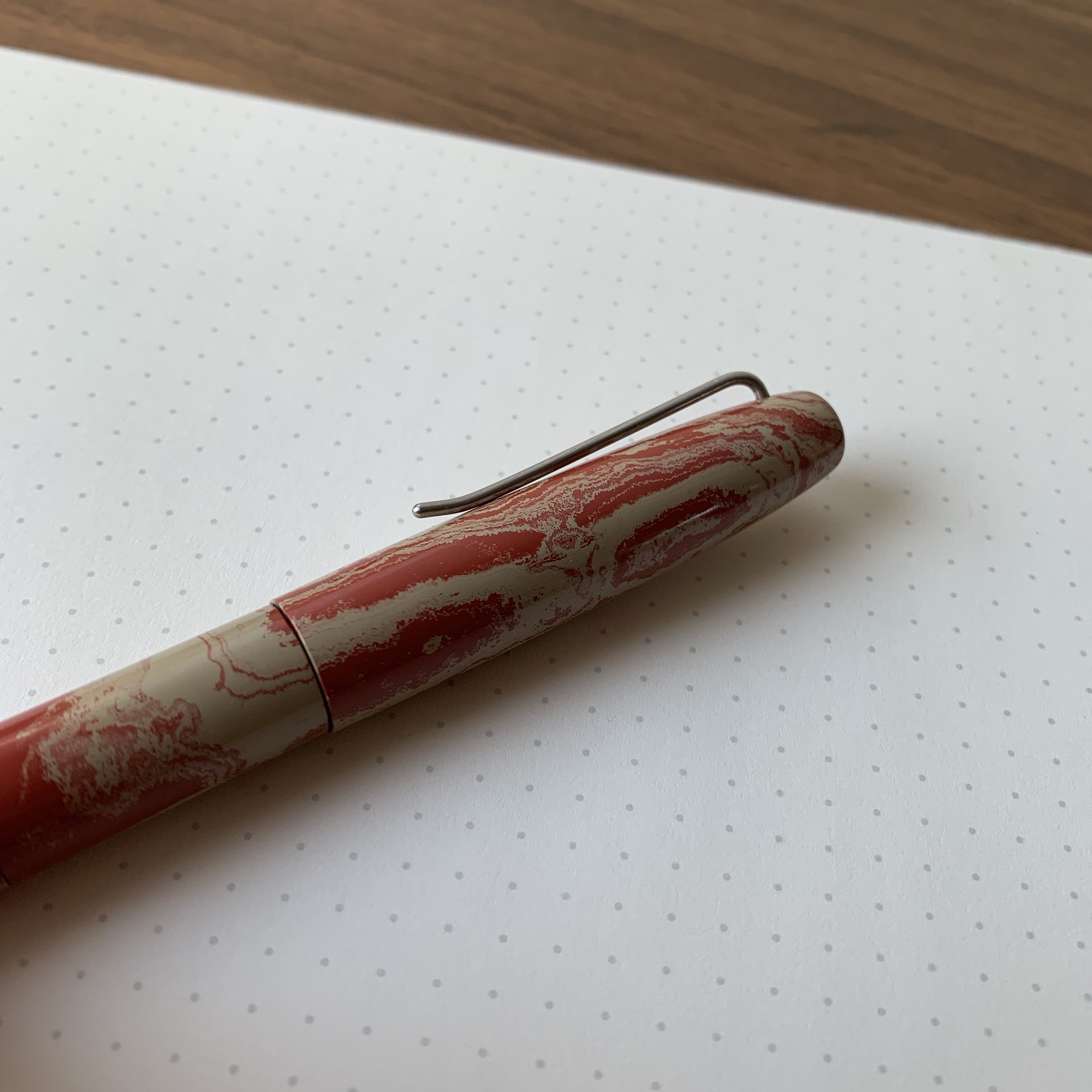
The Soubriquet is the first Desiderata pen to feature a clip, and I like the “wire” design.

The Soubriquet is the first Desiderata pen to feature a clip, and I like the “wire” design.

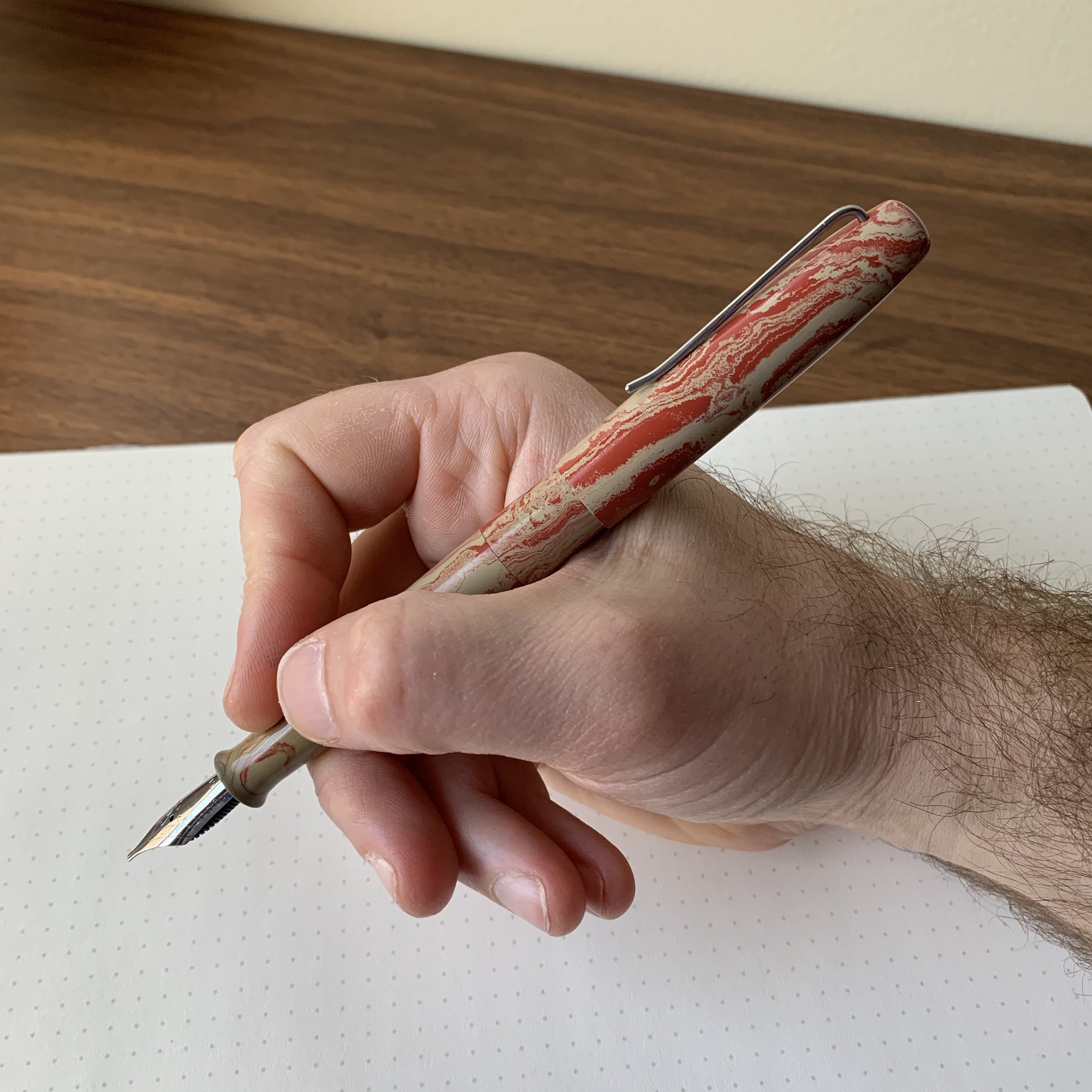
  • Size and Shape. The knock on a lot of modern custom pens is that they tend to be very large, especially when compared to vintage or vintage-inspired designs. The Soubriquet is the product of Pierre’s attempt to design a larger pen without “going overboard,” and he threads that needle quite well. The Soubriquet is about the same size as a Montblanc 146 (though much lighter), which is a great size for me in terms of ergonomics. I can comfortably use this pen posted and unposted, with the cap posting deeply on the tapered barrel. The section also tapers towards the nib, with the threads placed higher up on the barrel just below the ink window. I can’t emphasize enough how comfortable this pen is to write with for long periods of time.

  • Filling System and Ink Capacity. Since I opted for a JoWo 1.1mm stub nib, ink capacity and ink flow can become an issue. The Soubriquet features a “piston vacumatic” filling system, which uses an o-ring instead of a sac and operates like the filling mechanism on the TWSBI Go. Pierre designed the pen to allow one-handed filling, and it works as intended. You simply submerge the pen in ink and depress the plunger until the pen is full. This type of filler is also much easier to flush clean than a sac-based vacumatic pen. I was able to clean ink out of the pen and refill it with a different color in just a couple of minutes. The pen holds approximately 1.5ml, which will keep me writing for quite a while, even with a stub.

  • Clip. Earlier models of Desiderata pens were clipless, but the Soubriquet introduced a thin, wire-style clip made from 304 stainless steel. Despite the slim profile, this clip is VERY sturdy, and I’ve come to appreciate the distinct design element that the clip lends to the pen.

  • Ebonite Material. Pierre works extensively with ebonite, which many readers will recognize as a form of vulcanized rubber that’s been used to make pens (and bowling balls) for well over a hundred years. I’ve been looking to add a mottled/swirled ebonite pen to my collection for a while now, and when I spied the last briar ebonite pen on Pierre’s table, I knew this one was coming home with me. Ebonite has an unparalleled feel in the hand - it emits a warmth and has a softer feel to it than acrylic or other plastics, even though it’s still extremely durable.

The Soubriquet disassembled to show the filling system.

View fullsize Desiderata Soubriquet Unposted
View fullsize Desiderata Soubriquet Posted

Pierre urged me to make sure that everyone knows up front that Desiderata Pens are “small batch” manufacture, meaning that the pens are made in very small numbers in a one man shop. I guess that’s his way of saying that it’s not unusual to find small variances or imperfections on the pens, but other than a few barely perceptible tooling marks, the fit and finish on my Soubriquet is excellent. No issues or complaints whatsoever from me.

A comparison photo, from left: Aurora Optima, Desiderata Soubriquet, Montblanc 146, and Leonardo Momento Zero.

Takeaways and Where to Buy

I’m extremely happy with my Desiderata Soubriquet. I originally approached the purchase as a “tinkering pen” that I might use occasionally to practice handwriting and flex calligraphy, but the JoWo nib unit has worked so well that the pen has not left my daily carry for the past month. I do feel that I need to offer a note of caution: I have used the Zebra G nib in an earlier version of the Desiderata Daedalus that I borrowed, and while it does work well and can be quite enjoyable to use, fountain pens fitted with calligraphy dip nibs require much more frequent maintenance, as the nibs will deteriorate and need to be replaced on a monthly basis, if not sooner depending on how frequently you use the pen. If you are purchasing a Desiderata Pen specifically to take advantage of the Zebra G’s flex capabilities, I’d encourage you to read the resources available on the Desiderata website, and also watch some of Pierre’s YouTube videos in which he shows you how to set up the pen for this sort of writing. Be prepared to tinker with it!

As I mentioned above, I purchased this particular pen directly from Pierre at this year’s L.A. Pen Show, where he had just one of the Briar Ebonite models. The Soubriquet in this particular material is currently sold out, but on the website Pierre has indicated that he will consider requests to make more, so if you’re interested let him know! The Soubriquet runs anywhere from $225-250, which I find reasonable for a custom/small-batch pen with a non-cartridge/converter filling system. Pens ship with the Zebra G calligraphy nib, but JoWo No. 6 nibs are also available upon request, and it’s what I’ve been using since L.A. I likely will swap in the Zebra G in the near future to play around, but I’ve been enjoying this JoWo No. 6 stub so much I’ve not been motivated to change it out.

At the moment, Pierre has several other Soubriquet models available in his Etsy store, with additional Desiderata models for sale on his website. Pierre regularly attends pen shows, and during the last couple of shows he had a variety of Soubriquets in some unique acrylics not yet listed online. (Also, you definitely won’t want to miss the pre-order for the BAMF pen, which should ship within the next few months.)

Disclaimer: I paid for the pen featured in this review with my own money, though Pierre did give me a slight discount on the purchase of a second nib unit.
In Pens Tags Pen Review, Desiderata Pens, Desiderata Soubriquet
Comment

First Impressions: Spoke Pen with Uni Signo UM-151 (DX) Refill

March 13, 2019

One of my pickups from this month’s Baltimore Pen Show was a Spoke Pen prototype that Brad was kind enough to give me for review. I opted for red (of course), and all of the prototypes Brad brought to the show had titanium grips, which was just fine with me because it makes this pen a perfect match for my red/titanium Spoke Pencil Model 4. While my personal interests focus on fountain pens, I regularly use a handful of others, including two Montblanc rollerballs, my Lamy 2000 multi pen, a Ti Arto Universal Refill Pen, and a few Baux Pens loaded with Bic Cristal refills. The Spoke Pen is a unique addition because it’s the first machined pen designed specifically for the Uni UM-151 (DX) refill, an excellent fine-tip gel pen that until now has been restricted to my Ti Arto. Since this pen is a prototype, and since I’ve only had it in my hands for a couple weeks, this post will take the form of a shorter “first impressions” piece.

On the left, the Spoke Pen. On the right, the Spoke Pencil Model 4.

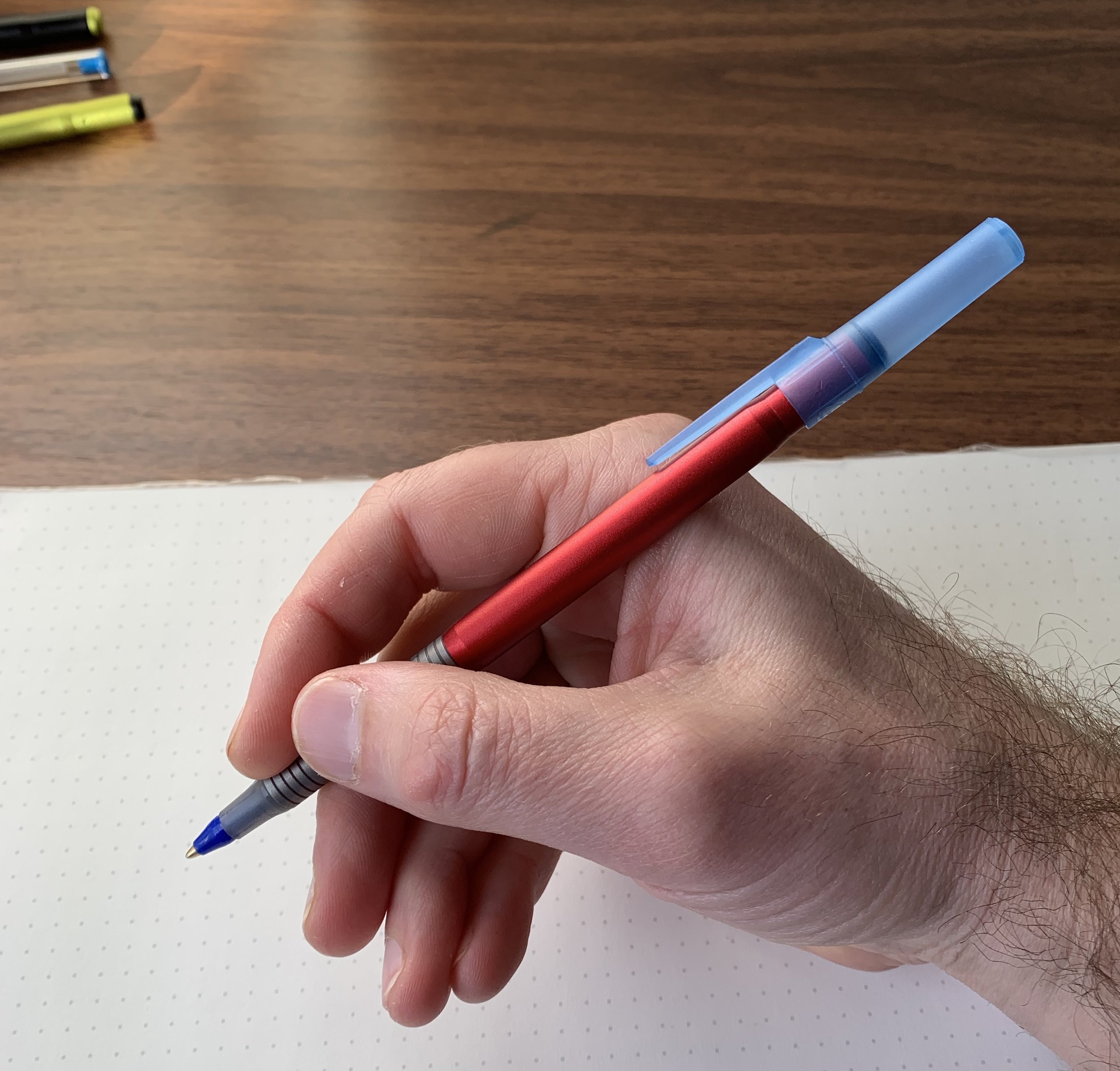
By far my favorite feature of any Spoke Design product is the grip section.

Things I Like

  • Design. I’ve owned a Spoke Pencil Model 4 for the past year or so, and also backed the Baux Pen 2 (which comes from the same “family”), so I’m a fan of Spoke Design. The Spoke Pen definitely shares the same DNA in terms of durable feel, great balance, and a modern, industrial look that appeals to me. I like the look of what I refer to as the “mixed metal” pens, combining an aluminum barrel with a titanium grip section. It makes for a durable, yet lightweight writing instrument.

  • Magnetic Closure. Brian also runs the “Strong Like Bull” magnet company, so of course the Spoke Pen was going to feature a magnetic cap closure. The cap closes firmly with very little play. Due to its strength, the magnet will attract little metal items on your desk like paper clips, etc., just be warned!

  • Grip. Though it’s part of the overall design of the pen, the grip on the Spoke Pen warrants separate mention. In my opinion, Spoke Design has perfected the grip of a machined metal pen. Rather than traditional knurling, the Spoke Pen, Spoke Pencil, and Baux Pen all use tightly spaced rings around the section. This sort of grip is quite comfortable to use over long periods of time, and doesn’t leave pressure marks on your fingers. The Ti Arto features a similar grip, but Spoke spaces the rings closer together, which I prefer.

  • Refill. The Signo UM-151 (“DX”) refill is one of the more popular fine-tip gel refills on the market, mainly because of the wide range of available colors and tip sizes. While my prototype came loaded with a black .5mm refill, I swapped that out for a .38mm red-black refill that I picked up at Kinokuniya in New York. I can’t say that the Signo DX is my all-time favorite gel refill, but it’s up there and does an excellent job. As I mentioned, the selection of colors is unparalleled.

The magnetic cap snaps shut firmly, and the clip is tight. Apart from the finish, which will wear on any metal pen, the Spoke Pen should be a highly durable writing instrument that will give you years of long-term use.

Potential Issues

I only spotted a couple of issues with the Spoke Pen, and it’s too early to say whether these are points that actually will end up bothering me over the long run, since this particular pen (1) is a prototype and (2) has only been in my hands for less than two weeks.

  • Posting. The Spoke Pen doesn’t post. Two years ago this would have been a deal-breaker for me, and I wouldn’t have backed the project, but I’ve recently expanded my horizons into some larger, non-posting fountain pens so it may end up not being an issue. Since this is a gel pen, I’ve been able to leave the pen uncapped on my desk while I’m using it without experiencing any skipping or drying out.

  • Anodized Finish. I’m withholding final comment on the finish, since this is a prototype, but I’ll note that there are a few spots of wear on the black clip, and places on the edges of the cap and around the “jewels” where the anodizing is already starting to wear away. With respect to the cap edges, that’s entirely predictable because you have a metal cap sliding onto a knurled metal section and there’s no real way to prevent it. Plus, it’s not noticeable when the cap is closed. Wear to the finish will eventually give the pen a “stonewashed” look, which you may or may not like depending on your personal preferences.

From left, the Ti Arto Universal Refill pen, which is the only other pen in my arsenal to accept the Signo DX; the Spoke Pen, and the Spoke Pencil 4.

Takeaways and Where to Buy

Like all Spoke Design products, the Spoke Pen is well designed and well made. If you’re looking for a machined pen specifically designed to house your Signo DX refill, you may not have many choices out there, but you’ll be hard-pressed to do better than this one. I’ve personally gravitated to Spoke products over the past couple of years (Spoke Pencil/Baux Pens) due to the grip, which I find much more comfortable than other options on the market. I ended up backing the Kickstarter project for the “two pens” reward level, and will likely end up using these similar to how I use my Baux Pens: to house various colors and tip sizes of specific refills that I like to use for certain purposes.

Unfortunately, the Spoke Pen Kickstarter has now closed, so if you didn’t back you’ll have to wait until Brad and Brian finish project fulfillment and officially launch the project before getting your hands on one of these. In the meantime, if the design appeals to you and you’re a fan of mechanical pencils, you can purchase an excellent Spoke Pencil, which now comes available in Model 4 and Model 5.

Disclaimer: Spoke Design and Brad Dowdy provided me with this prototype pen for review purposes, free of charge. I was not otherwise compensated for this review, and have separately backed the Kickstarter project.

In Pens Tags Spoke, Spoke Design, Spoke Pen, Kickstarter, FIrst Impressions
3 Comments

First Impressions: Aurora 88 Unica Nera

February 13, 2019

I didn’t explore Aurora as a brand that might seriously interest me until last year. Sure, I’d previously reviewed a few pens on loan from Kenro, the Aurora distributor, or that I’d borrowed from friends, but I hadn’t invested any of my own resources in the brand. That changed when I acquired the “Black Ops” Talentum released last year. Since then, I’ve picked up a few more, including an 88 Sigaro Blu, an 88 Minerali, and this year’s “stealth” release, the 88 Unica Nera.

The trim on the Aurora 88 Unica Nera and the Talentum Black Ops is quite different. I like them both, but I might prefer the lighter “gunmetal” look.

The Unica Nera is a natural follow-up to two other pens already in Aurora’s lineup, the Aurora 88 Satin Black, and the 88 “Ottantotto” demonstrator. Aurora’s latest combines the matte black barrel of the Satin Black with the Ottantotto’s black-plated trim. The result should please fans of “stealth” or “blacked out” pens, and on the whole the Unica Nera is a great pen, but there are a few nits that I think are open to critique.

A size comparison between the Talentum Black Ops and the Aurora 88 Unica Nera. The pens are actually close to the same size, but the Talentum feels bigger due to the larger cap.

What Do I Like About The Unica Nera?

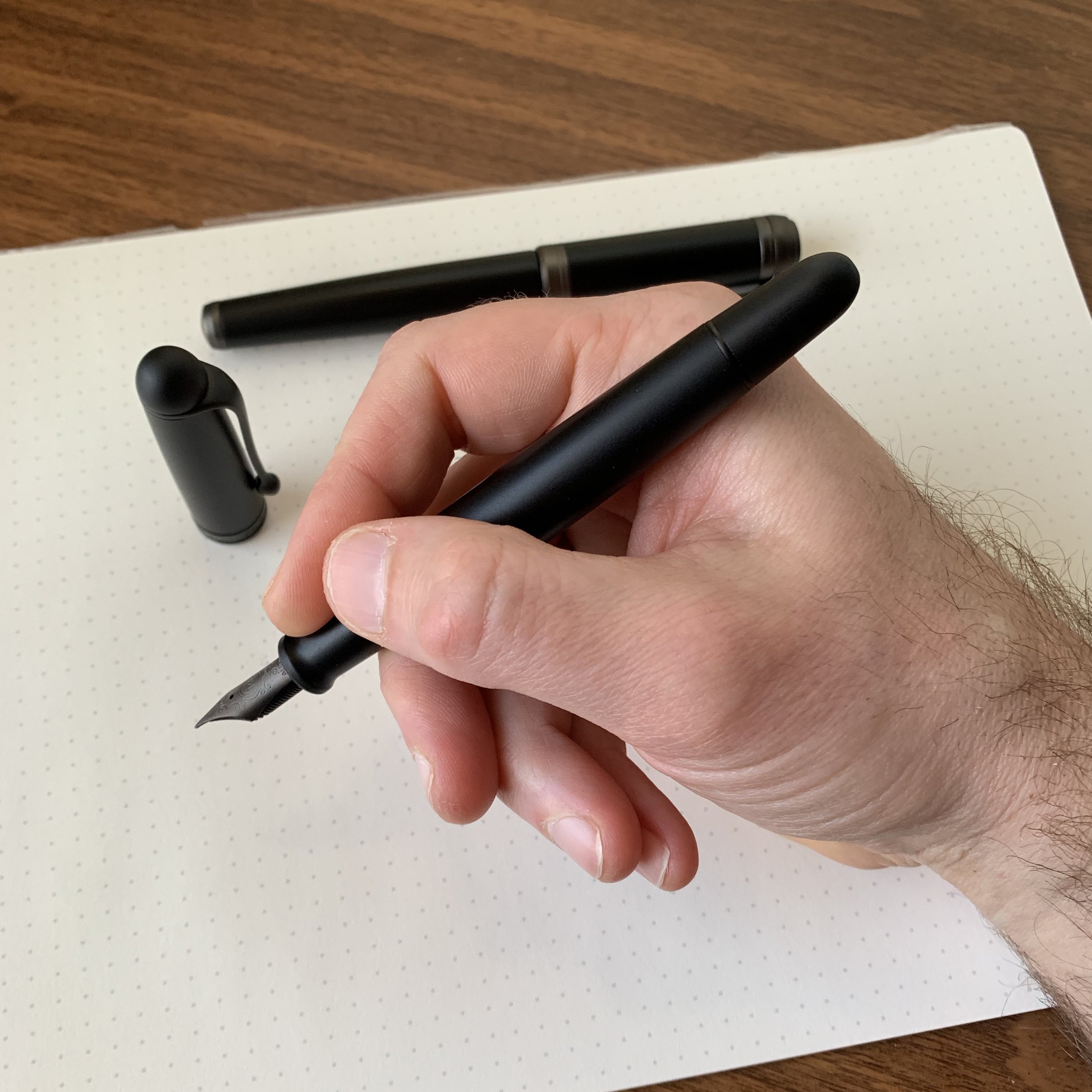
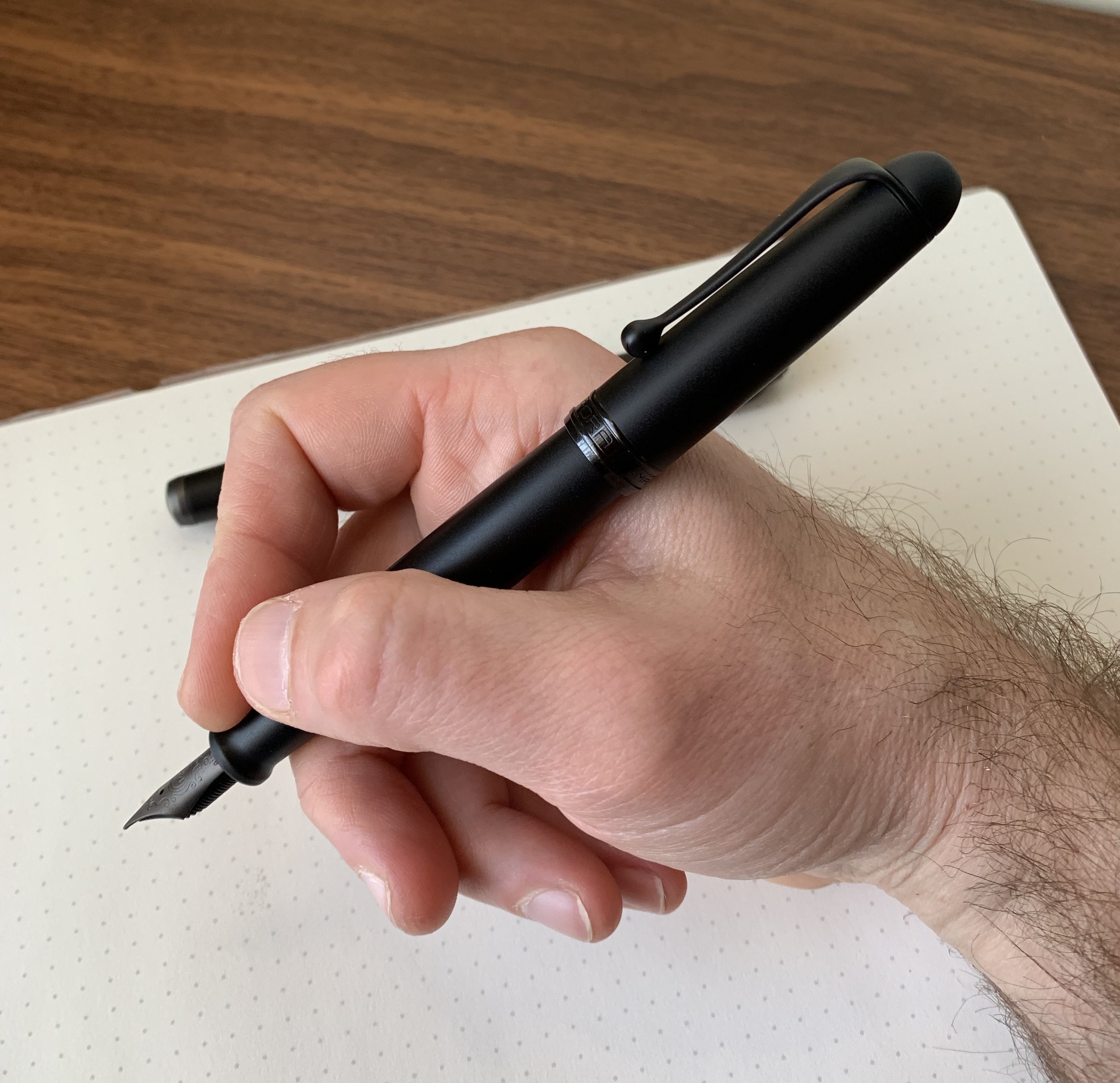
  • Like the Aurora 88 Satin Black, it’s a lightweight pen, despite being a piston filler. The Unica Nera is also well-balanced, and I could write with this pen all day posted. I say posted because the Unica Nera is so light that I need to post the cap as a counterweight. The cap posts deeply and doesn’t make the pen too long.

  • The matte finish on this pen looks impeccable and the texture feels great in the hand. There are no no injection molding lines or visible flaws in the finish on either the cap or the barrel.

  • The Aurora 88 has a very large ink capacity, and the piston turns smoothly without sticking. Aurora pistons can sometimes be difficult to flush clean, but I’ve changed inks in this one a couple times with no issues.   

  • The Unica Nera features the same 14k plated nib as the Talentum Black Ops, and in my case, both are fine nibs. The fine nib in my Unica Nera writes a much finer line than my Black Ops, despite having the same nib designation, though it writes smoothly and with perfect ink flow. In my experience, Aurora nibs have some variability in terms of line width (they’re made in-house), and are known to write with a bit of “tooth.” In a couple of cases, I’ve found the “toothiness” to cross the line into “scratchiness” due to ever-so-slight misalignment of the tines, though I’ve always been able to fix the issue with nothing more than a loupe and my fingernail.

Both of these nibs are black-plated fine nibs, though one writes much finer than the other. The Talentum nib is more of a medium.

Things I’m Not Sure About / Small Criticisms

  • The Unica Nera is an extremely lightweight pen. Part of me wishes that this one had a bit of additional heft to it. Sometimes when I’m writing with this pen I find myself thinking that it’s just a touch insubstantial.

  • The matte black clip and the shiny black cap band don’t match. This could be a design choice, where Aurora tried to add some contrast to a pen that would otherwise be one-dimensional, but I’d rather see them do this by varying the tone of the plating on the trim, which brings me to….

  • I prefer the look of the trim on the Talentum Black Ops, which has a more traditional ruthenium/gunmetal tone than the plating on the Unica, which appears to be identical to the trim used on the “Ottantotto” black demonstrator. All three pens use the same nib, which has the gray/gunmetal hue.    

I like pens with ink windows. Here, the Unica Nera is showing off some Robert Oster FIre & Ice.

“So What About the Durability of the Trim?”

Ever since I published my initial piece on the Talentum Black Ops, I’ve had to field questions about the durability of the trim, and I will answer them here: No, I’ve not had any issues with the trim wearing off the clip, cap band, or any other areas. I did hear that there was a bad batch of pens with defective trim that I believe went to Europe, which caused a delay in the Black Ops’ global release, and some of those pens might remain in circulation, but I’ve personally had no problems. In general, I’ve had good luck with the trim on my stealth pens, including not only the Talentum but also my Sailor Pro Gear Imperial Black and Sailor 1911 Black Luster models.   

Aurora 88 Unica Nera Unposted
Aurora 88 Unica Nera Posted

Takeaways and Where to Buy

Some people are tired of the “all black” look, but I’m not, especially where it’s well-executed. These understated workhorses are pens that I can use all day at the office, and look great without drawing unwanted attention. I’ve been using the Unica Nera at work for the past couple of weeks, and can confirm that it’s a lightweight, easy pen to write with for extended periods of time, and sports a firm fine nib that’s I’ve enjoyed using for planner notes and annotation. If you don’t have a black trim pen in your collection, the Unica Nera is definitely worthy of your consideration.

These pens are relatively new, and therefore still making their way to most retailers. Pen Chalet currently has them in stock, priced at $585, which is around the typical price point of an Aurora 88. The Unica Nera is slightly more expensive than the Satin Black but far less expensive than the Ottantotto demonstrator.

Disclaimer: I received the pen featured in this review directly from Kenro Industries, Aurora’s North American distributor and a sponsor of this blog, and paid with “store credit” that I received in exchange for sidebar advertising. This post contains affiliate links.

In Pens Tags Pens, Aurora 88, Aurora 88 Unica Nera, FIrst Impressions
Comment

Who Backed the Baux Pens? This Guy.

February 9, 2019

I make no apologies for the fact that I’m an unabashed fan of Bic ballpoint pens. Whether it be the original Bic Cristal, the retractable Bic Clic, or those ginormous Bic multi pens that you carried in third grade, I have and use them all regularly. I consider them the ultimate low-cost, low-distraction, functional writing tool that will work reliably pretty much anywhere except underwater or upside down (which is when you would want to reach for your Fisher Space Pen or other pressurized cartridge).

The pens featured here are technically the Baux Pen 2, a follow-up on the original Baux Pen Kickstarter project from 2013, which launched and closed long before I was far enough down the pen-internet rabbit hole to be aware of it. The project is run by brothers Dan and Brian Conti. You might recognize Brian from his company, Spoke Design, which makes the excellent Spoke Pencil and the current Spoke Pen Kickstarter, a collaboration with Brad Dowdy from the Pen Addict.

The product itself is fairly simple: the Baux Pen is an aluminum stick pen with textured aluminum or titanium grips (shiny or blasted matte) that borrows the rest of the parts from the Bic pen itself. To replace the refill, you remove the plastic “collar,” the refill with the writing tip, and the cap from a Bic Stic pen and insert those parts into the Baux Pen body. It’s very easy and straightforward.

How to disassemble a Baux Pen to incorporate the refill: If you want to use the refill from a Bic Cristal, you will need to borrow the “collar” (pictured second from left) from a Bic Stic to seat the Cristal refill in the Baux Pen. You can then use the ultra fine ballpoint refills from pens like the Bic Cristal “Xtra Precision”, in all their multicolor glory.

One thing I love about the Baux Pen is the grip. I opted for blasted titanium on all three of my pens, and the combination of the matte texture and rings make this a super-comfortable pen to write with. Since titanium and aluminum are both lightweight, you don’t lose one of the best attributes of the Bic pens - their “go-anywhere” portability - and the Baux pen body has a nice balance. The end of the barrel is slightly tapered, allowing you to post the cap. Plastic Bic Stic caps, of course, add no weight whatsoever.

View fullsize Baux Pen 2 Posted
View fullsize Baux Pen 2 Unposted

Takeaways and Where to Buy

When this Kickstarter Project was pending, I heard it characterized in many circles as “specialized” or targeted only to artists, designers, and others who use Bic pens for drawing in connection with their work. I disagree. Whether they want to admit it or not, everyone has Bic pens lying around their house, stashed in their car, or in their bag for those occasions when nothing else will work, such as writing on those shiny USPS shipping labels from the post office and all those multi-sheet forms you need to fill out when mailing a package.

If you like the feel and writing properties of a Bic ballpoint, but want to upgrade your daily writing instrument to something just a bit nicer looking, the Baux pen is a great upgrade that doesn’t cost much at all. I backed for three pens with titanium grips, and the price came to $36. The cost for backing a single aluminum pen is only $9. Now that the project has finished shipping, I hope that the Baux Pen gets a wider release (perhaps through the Spoke Design shop?) because it’s a great product that deserves wider exposure than the Kickstarter received. Unfortunately, I haven’t been able to find a retailer where this pen is being sold outside of Kickstarter, but hopefully that’s because the creators wanted to fulfill Kickstarter orders first.

Disclaimer: I purchased the pens featured in this review with my own funds, for my own collection. This post contains affiliate links.

In Pens Tags Bic, Bic Cristal, Bic Stic, Baux Pen 2, Baux Pen, Spoke, Ballpoint
1 Comment

Exploring Stock Stub Nibs, Part II: Higher-end Options

February 7, 2019

A couple of years ago I wrote a piece on stock stub nibs, which focused on inexpensive options such as the Pilot Metropolitan and the TWSBI 580, both of which offer a very affordable stub nib that gives you line variation and makes your writing look more interesting at a price point as low as $15. As I wrote in that article, the main advantage to starting out with these inexpensive specialty nibs is that they allow you to learn how a stub writes without having to (potentially) sacrifice a pen in your collection to a nibmeister. I say this because for every pen I have had custom ground that ended up amazing, an even greater number of grinds didn’t work out, mostly because I chose a poor grind for my handwriting style, but a couple flopped because I went to a pen show and had the pen worked on by someone who didn’t know what they were doing.

Here, I want to discuss a couple of excellent stock stub nibs that are available on pens at higher price points. You might ask why spend money on an expensive stock stub when you can get a pen custom ground to your own personal preferences? A few things to consider:

  • If you’re looking for a stub nib at a standard “broad” width, a stock nib offers this at a stock price point (though sometimes with a slight upcharge) without having to undertake the additional expense and uncertainty of going the custom grind route.  

  • You don’t have to visit a pen show. If you’re thinking of getting a pen custom ground for the first time, I highly recommend visiting a pen show and having the nib work done in person. You can work with the nibmeister to adjust the grind to your specifications as opposed to working through the mail. The costs of return shipping can add up!

  • Most importantly, a stock stub nib is covered by the manufacturer’s warranty and return policy. Everyone in this hobby thinking of having their nibs custom ground should realize that it voids the warranty on the pen, so if the grind doesn’t work out, you have to replace either the nib or the pen. On the other hand, if a stock stub is bad, or the grind doesn’t work for your particular writing style, you can return it to the retailer or distributor for an exchange.

So which stock stubs am I currently enjoying? I added a couple to my collection last year:

Three writing samples, starting from top: the Leonardo Officina Italiana Stub; the Aurora stub, and a custom ground .6mm Masuyama stub for comparison purposes.

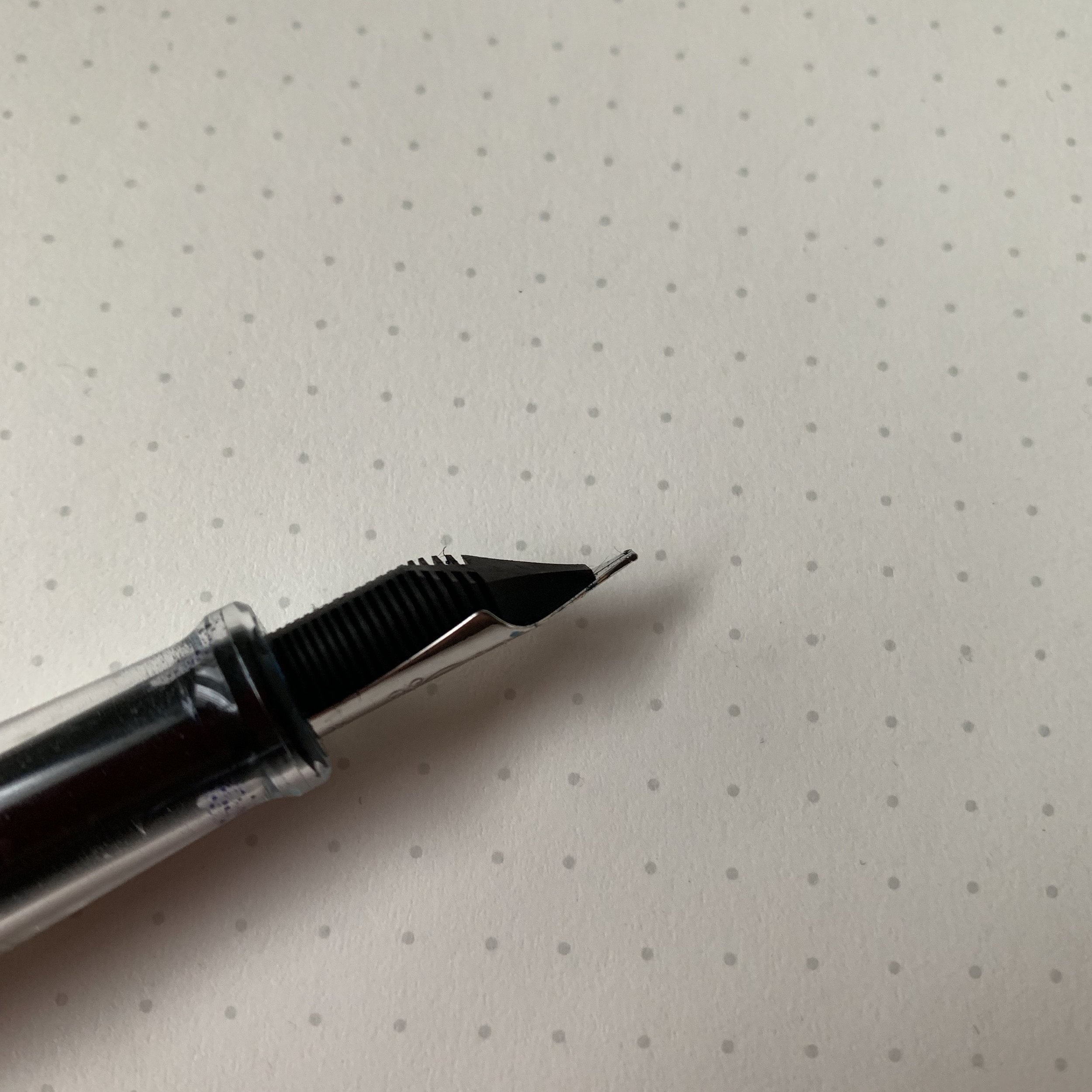
Aurora. If you enjoy a crisper nib that offers more line variation than your typical stock nib, Aurora makes an excellent 18k stub. It’s approximately .7mm in width and has an ebonite feed, making the line width and ink flow perfect for everyday writing. It’s also surprisingly smooth, and mine has little to no tooth. A few years ago, I had picked up an Aurora Ipsilon Quadra with a stock italic nib, and I didn’t care for that nib at all because it was far too sharp and skipped and hard-started like crazy when I tried to use it as an actual writer. The stub on my 88 Minerali, however, is superb, on par with custom work. Lately, the word has gotten out about Aurora stock stubs, so they have been a bit harder to find.  Currently, Pen Chalet has a stub nib option available in the all-black Aurora Unica Nera, and Dan Smith at The Nibsmith also keeps them in stock as an option for most Aurora pens.

View fullsize Aurora Stub Nib
View fullsize Aurora Stub Nib and Feed

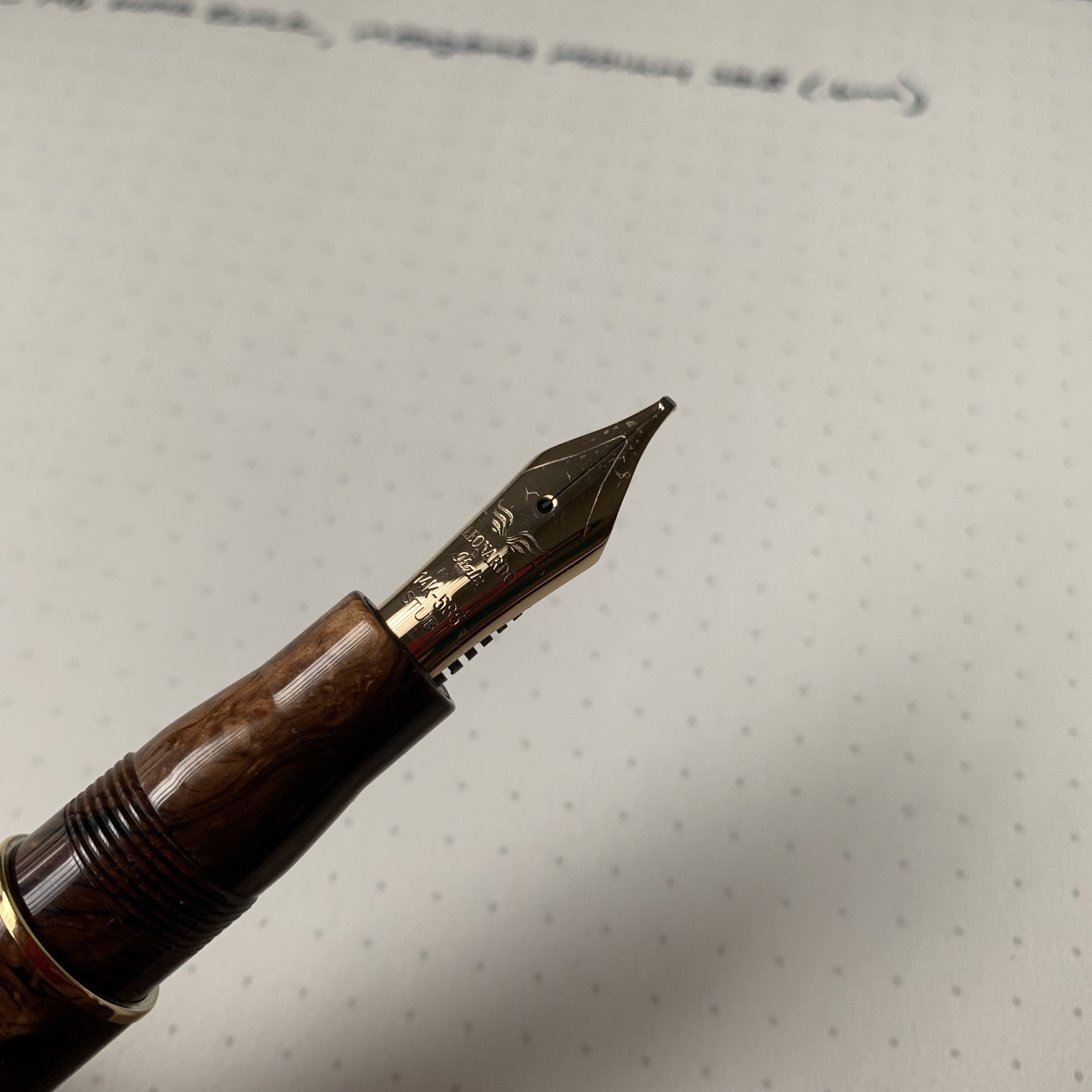
Leonardo Officina Italiana. If you prefer a wider, smoother stub, consider the offerings from a new pen company based in Italy, Leonardo Officina Italiana. I was a fan of Delta pens before that company went out of business, and Leonardo was founded by former Delta employees. The company’s products reflect its heritage, though I’d say the Leonardo pens I own are a step above Delta in terms of fit, finish, and quality control. (It also doesn’t hurt that they have access to some discontinued Omas celluloids, due to a manufacturing partnership with Omas successor Armando Simoni Club.) Though wider than the Aurora stub (about 1.1-1.3mm), the Leonardo nib also features an ebonite feed and writes a narrower line than you would expect, making it another good option for everyday writing. I hear good things about Leonardo’s steel stub nibs as well, but haven’t personally tried them. I acquired the pen pictured here from Pen Venture as part of a three-pen set, and Emy tuned the nibs to perfection prior to shipping.

View fullsize Leonardo Officina Italiana Stub Nib
View fullsize Leonardo Nib and Feed

Franklin-Christoph and Pilot. Two other brands I should mention are Franklin-Christoph, which offers a wide variety of stub, cursive italic, and S.I.G. (Stub Italic Gradient) nibs in both stainless steel and gold. Those nibs are all excellent, and deserve their own article. The other brand I should mention here is Pilot, and in particular the Vanishing Point. Pilot offers a stub (“SU”) nib option for the VP that is roughly the same width as the Aurora, but I haven’t had the opportunity to write with one extensively.

If you’re interested in custom grinds, you can also check out this article, in which I talk about some of my favorite specialty grinds.

Disclaimer: This post contains links to paid sponsors and affiliates. Both pens pictured in this post were purchased by me with my own funds, for my own collection.

In Pens Tags Stock Stubs, Custom Grinds, Stub Nibs, Custom Nibs, Specialty Nibs, Aurora, Leonardo
1 Comment
← Newer Posts Older Posts →
Store Hours and Events
Shop T.G.S. Online
Updated 2026 "Best Pens" Guide
No results found
On The Paper Trail: Live In Nashville Event Tickets Now Available!
TGS_25 Roterfaden Restock Notification
Hierarchies of Fountain Pen Friendly Paper

Join Our Patreon!
Subscribe to the TGS E-mail List

Featured Posts

Featured
10-Fountain-Pens-Favorite-Inks
August 22, 2026
Three Keeper Inks: Choosing Inks for 10 Fountain Pens
August 22, 2026
Read more →
August 22, 2026
Everyday-Stationery-Bags
July 25, 2026
What's the Best Everyday Stationery Bag? My Own Considerations and 5 Options for Pen Show Season
July 25, 2026
Read more →
July 25, 2026
Graphilo-Kobeha-Paper.jpg
July 11, 2026
Paper Review: Graphilo by Kobeha
July 11, 2026
Read more →
July 11, 2026
The Gentleman Stationer RSS

View Cart

© Digital Divide Media, LLC, 2014-present.

All content is the exclusive property of Digital Divide Media, LLC, d/b/a The Gentleman Stationer, including “The Gentleman Stationer” website and trademark, and should not be reproduced without express written permission.  All rights reserved.

All content containing paid advertising, affiliate links, or sponsored content will be plainly disclosed by a disclaimer when/if featured.

Contact Information

Website Terms and Conditions

Store Shipping Policy and Return Policy

Privacy Policy and Cookie Policy

Accessibility Statement

Powered by Squarespace