• Blog
  • Shop
  • Podcast
  • Resources
  • Archive
  • About
  • Contact
  • Cart
  • Sign In My Account
Menu

The Gentleman Stationer

Vintage Living in the Modern World.
  • Blog
  • Shop
  • Podcast
  • Resources
  • Archive
  • About
  • Contact
  • Cart
  • Sign In My Account

Pen Review: Visconti Van Gogh "Vincent's Chair"

October 21, 2017

Visconti’s “Van Gogh” Impressionist Collection receives scant attention, at least as compared to the Italian company’s other flagship pens such as the Homo Sapiens and Divina. That’s a shame, because of all the Visconti pens I’ve had the opportunity to test out, this might be my favorite. (Sorry, Homo Sapiens Dark Ages.)  

Each pen in the Van Gogh series is cast from an acrylic resin specially mixed to match the palette of colors found in a Vincent Van Gogh painting, in this case, Vincent’s Chair. (Pens based on the works Starry Night, Shoes, Irises, and one of his self-portraits are also available, among others). Each piece is unique, and even those pens based on the same painting will still feature different swirls and patterns in the acrylic.

The Van Gogh packaging includes a reproduction of the original artwork on the inside flap of the leather box, so you can compare the colors in your pen to the painting that inspired it.

This particular Van Gogh features a very nice steel nib - actually, one of the best Visconti nibs out of the box that I’ve used. As I’ve mentioned in prior reviews, Visconti nibs can be supremely frustrating because the company’s quality control is all over the place. These pens sit at a very high price point, and of the three Visconti Pens that I’ve reviewed (Homo Sapiens Dark Ages, Rembrandt Back-to-Black, and this Van Gogh), all three required some sort of nib adjustment out of the box. Not exactly what you would expect when you are shelling out anywhere from $150-700 for a fountain pen.

The stainless steel nib on the Van Gogh is quite attractive, with the crescent-shaped breather hole and scrollwork. 

The stainless steel nib on the Van Gogh is quite attractive, with the crescent-shaped breather hole and scrollwork. 

In the case of this Van Gogh, the “nib work” required to get the pen in writing order was fairly minor: the tines were misaligned but I was able to easily push them back into place with my thumbnail after straightening out the feed. After this ten-second adjustment, the pen wrote exceptionally well: a wet medium line with no hard starts or skipping.

Note: I’m experienced with fountain pens, and consider a tine adjustment to be “minor” and something I can handle myself. I recognize that someone spending $200 on their first expensive fountain pen might not be so brave. For that reason, I generally do not recommend Visconti as a brand for beginners. Regardless, if you are considering purchasing a Visconti, purchase from a reputable retailer (like Goldspot) and specifically ask them to inspect the nib for you prior to shipment to avoid any problems on the front end.

The Van Gogh pens feature the patented Visconti clip, and have the name of the painting that inspired the pen engraved around the cap band. 

So what keeps bringing people back to Visconti, despite the temperamental nibs? The design, which always has a lot of personality to it and inspires strong opinions (positive and negative), particularly surrounding Visconti's larger clips. Those who enjoy Visconti design, however, demonstrate exceptional loyalty to the brand, and Visconti collectors/enthusiasts are well-represented in the pen community. Personally, I like the Visconti “Bridge Clip,” and the polished version here works especially well on the smaller, faceted Van Gogh pen. Yellow pens also tend to be hard to find, and I found this color combination on the “Vincent’s Chair” pen, with its swirls of blues and greens, especially attractive on the faceted barrel. The silver trim also sets off the acrylic nicely.

The Van Gogh also features a secure magnetic closure on the cap, and is compatible with Visconti’s “My Pen” personalization system, if that’s something that interests you.

The Van Gogh might end up as one of my preferred Visconti models. The compact size, light weight, and excellent nib (once adjusted) combine to form an extremely comfortable daily writer. The pen also posts well. While the pen has a metal section, I didn’t end up with a slippage problem, and this is something that bothers me less and less as I learn to not grip my pens so tightly. 

Takeaways and Where to Buy

You can purchase this Visconti Van Gogh Vincent’s Chair fountain pen, as well as the other pens in the Visconti Van Gogh Impressionist Collection, from Goldspot Pens. The Van Gogh sits around the midpoint of Visconti’s pricing scale at $289, which admittedly is on the high side for a steel-nibbed acrylic pen. That said, the effort required to mix and pair each resin with a particular Van Gogh painting likely took work and drove up the cost, so when viewing these pens from a cost/value perspective, it’s probably more appropriate to compare them to a custom pen like an Edison or a Newton, which sits around that same $300 price point.

I've posted this pic before I know, but to give you a sense of the size, here's the Visconti (far right) compared against (from right) a Pilot Vanishing Point, a Ryan Krusac Legend L-14, and a 3952 X800.

Many thanks to Goldspot for loaning me this pen for review. Overall, I’m sad to have to send this one back, but a Vincent’s Chair and/or Starry Night pen might be making its way into my collection in the future.

Disclaimer: Goldspot loaned me this pen free of charge for review purposes. 

In Pens Tags Visconti, Van Gogh, Pen Review
1 Comment

Pen Review: Retro 51 Retro Collection Desk Set

October 7, 2017

Regular readers of this blog likely already know Retro 51, the maker of the “Tornado” line of rollerballs, fountain pens, and pencils. Their special editions - including the most recent “Zodiac” pen - sell out quickly, and fuel a lively sub-group of Retro 51 enthusiasts and collectors within the larger pen community. For today’s post, I’m going to take a look at a pen from Retro 51 that doesn’t receive the attention it necessarily deserves: the vintage-style desk set.

Retro 51 has clearly modeled the vintage-style desk set after the classic Esterbrook version that became a fixture at banks and post offices in the mid-20th century. While this modern desk set features a rollerball and not a fountain pen, it maintains the “vintage” look and truly does class up your workspace. Plus, it’s a Retro 51 product, so the build quality is solid.

The dark black cherry lacquer is gorgeous. I'm a sucker for anything red-black, so when I saw that this color was available... you know the rest. The only branding on this set is a small imprint around the pen holder on the base. 

My desk set has been beautifully finished and looks great on my desk. Per the manufacturer’s specs, the base is made of poly resin and coated with polished lacquer, which on this particular desk set is "Black Cherry," a dark red-black color. The bottom of the desk set sports a felt pad, so it won’t slide around or scratch your desk. The pen itself is made of metal and coated with the same lacquer as the base - I would guess it’s aluminum, given the extremely light weight. Despite the metal barrel, the pen is not noticeably heavy, and in any event the length and tapered design lends it exceptional balance. Since I received this pen in the mail, I’ve alternated between it and the Inventery Machined Pen as my tool of choice for working things out on my Baron Fig Mastermind desk pad. Both sport the same excellent Schmidt liquid-ink rollerball refill, and also accept the Schmidt Easyflow 9000 ballpoint refill.  

View fullsize Retro 51 Desk Pen in hand
View fullsize Retro 51 Desk Pen Matte Grip Section

Takeaways and Where To Buy

I’ve dabbled with collecting vintage-style desk pens over the years, and this has piqued my interest once again. You can purchase the Retro 51 Desk Pen from our sponsor Goldspot Pens. As with all Retro 51 Pens, the pricing is well below what I would expect for an item of this quality. Typically priced at $60 for the desk set, Goldspot has them on sale for $48, available in Turquoise, White, “Chalkboard Black” (matte), Stainless Steel, and the Black Cherry version reviewed here.

Disclaimer: Goldspot provided me with this item free of charge, for review purposes. Many thanks to Goldspot for sponsoring the blog.

In Pens Tags Retro 51, Retro 51 Desk Pen, Desk Set
Comment

Pen Review: Aurora 88 Minerali in Azurite

September 30, 2017

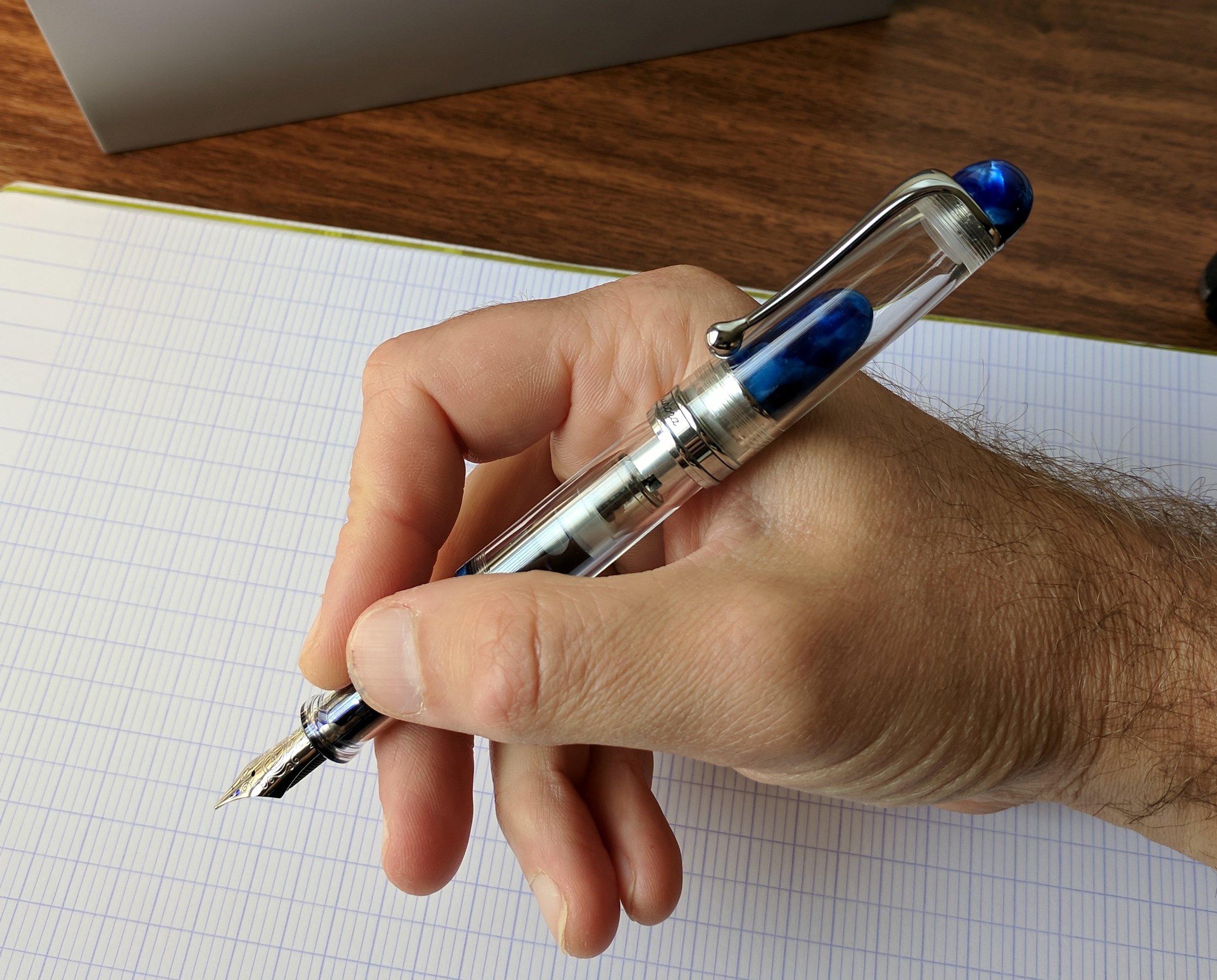
One of the more interesting trends emerging over the past year has been the way in which Aurora has emerged to fill the void left in the Italian pen world by the demise of Omas, the suspected impending demise of Delta, and the leadership turnover at Visconti. 2017 saw Aurora launch a very well-regarded series of limited editions, including the 88 Nebuloso, the 88 Anniversario with the new “flexible” nib, and the 88 “Sole.”  

The numbering of each Minerali pen is included on the cap, and done in a tasteful, understated way. 

Through the end of 2017 and into 2018, Aurora will release five new limited edition demonstrators featuring a different color Auroloide trim on the piston knob, cap finial, and barrel. Dubbed the "Minerali" Collection, the first pen is the one featured here, the “Azurite” blue, with a new pen to follow each month. Other colors will include green, orange, purple, and red, and Aurora says that each version will be limited to 388 pieces, so it’s a true limited edition.  

I also love that there's not much branding on this pen, other than the standard "Aurora" engraving on the cap band. 

Build Quality

The 88 Minerali is one of the more attractive fountain pen demonstrators that I’ve had the opportunity to handle. The polishing and finish have both been immaculately executed, with no visible flaws in the clear acrylic. The blue “Auroloide” (Aurora’s proprietary name for their cellulose acetate material) really brings out the clarity. I was prepared to be underwhelmed by the pen, especially at the expensive price point, but now I want one.

A close-up shot of the blue Azurite material. I actually prefer the understated look of the demonstrator with Auroloide accents, to a pen made entirely of this material. I think this will be especially true with respect to the orange and purple, as both the Sole and Nebuloso contained a bit too much color for me. 

I’ve heard some grumbling that the “Minerali” line is just a way for Aurora to maximize their return from the spare rod stock that they used in previous limited edition Optimas and 88s. (For example, it appears that the purple and orange will feature the same material used in the Sole and the Nebuloso.) I definitely didn’t get the sense that Aurora created this pen as an afterthought, much less a “spare parts” piece. And, even if that’s the case, if they can make a pen that looks this good in the process, I really don’t care.

I do enjoy the scrollwork on Aurora nibs. 

The fine nib wrote exceptionally well out of the box - moderately wet, with just a touch of the tooth for which Aurora is known. The line width and wetness fit my writing style perfectly, and I could use this nib as an all-day, everyday workhorse. Did I mention the scrollwork is beautifully done?

View fullsize Aurora 88 Minerali Posted
View fullsize Aurora 88 Minerali Unposted
View fullsize Aurora 88 Writing Sample - Fine Nib

The one nit I can pick with Aurora’s pen design is their piston, and how difficult it can be to clean behind the seal, especially in a demonstrator pen. (I noted the same issue in my prior review of the Aurora Optima Nero Perla.) It takes a LOT of flushing, shaking, and blotting to clean Aurora pens out completely. If I purchased one of these, I’d be leery of using any ink remotely capable of staining, and would probably stick to Aurora Black, Blue, and Blue-Black.  

Where to Buy

Many thanks to Cary and the team at Kenro Industries for sending this pen over for review. You can purchase the Aurora 88 Minerali limited editions from any Aurora retailer, including site sponsor Pen Chalet. At $795 MSRP, it’s not an inexpensive pen by any means, but retail tends to be a bit lower and Pen Chalet always has excellent prices. If you’ve been waiting on an Aurora 88 demonstrator, and the Azurite trim appeals to you, act quickly before this one goes away.  As I noted above, I’m personally holding out for one of the orange or red Minerali pens (the names of which are still unannounced, to my knowledge).

Disclaimer: This post contains affiliate links. 

In Pens Tags Aurora, Aurora 88, Limited Edition, Aurora Minerali
2 Comments

Pen Review: Inventery Mechanical Pen

September 13, 2017

Of all the different types of pens I've used over the years, I've given the rollerball the least amount of love - until this year, when something "clicked" and the retractable liquid ink rollerball now stands to become my primary fountain-pen backup. The latest pen to capture my attention is the Machined Pen from Los Angeles-based design house Inventery, a new company that launched in January of this year.   

Inventery bills itself as an "independent design house specializing in the design and manufacturing of refined goods and stationery products," selling products for the "thinker, journeyman, and everyday essentialist." Their shop carries an eclectic array of goods, including the Machined Pen, the Construction Notebook, Clip-on Sunglasses, bifold wallets, and rings.  

Currently, the Inventery Mechanical Pen is available in four colors: Brass, Onyx (coated brass), Chrome, and Brushed Chrome (both of which are also plated brass). The three shown here, from left, are Brushed Chrome, Brass, and Onyx. 

"Refined" accurately describes the Machined Pen. Inventery has distilled the design of this pen down to the bare minimum, with three well-thought out design touches that set it apart from other "minimalist" machined pens on the market. First, the Inventery pens are all machined from a single rod of solid brass (even the black "Onyx" and Chrome pens are coated/plated brass). In order to swap out the refill, you unscrew the knock mechanism and drop the refill in through the back of the pen. As a result, you have a pen with seamless unibody construction and no seams or lines.

Per Inventery, the Schmidt knock mechanism has been modified to allow you to change the refill from the back of the pen.

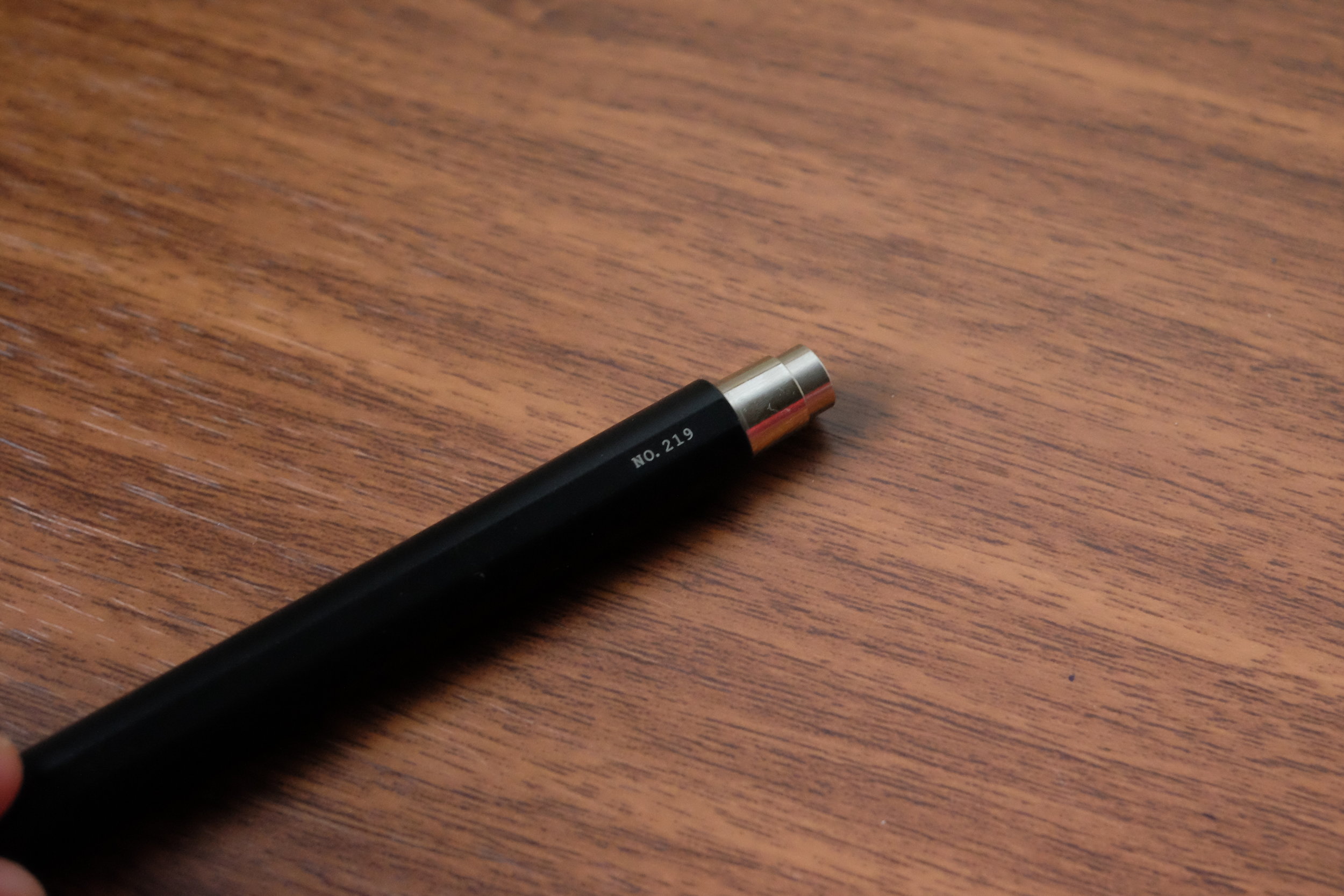
Second, branding is minimal. Each pen features Inventery's small "I" logo on the front, with each pen also numbered on the reverse side. The logo and numbering appear most prevalent on the Onyx pen; they're barely visible on the brass and chrome-plated versions, especially once the brass has developed a nice patina from regular use. 

View fullsize Inventery "I" Logo
View fullsize Inventery Numbering on the Faceted Side
View fullsize Logo on New Brass Pen (Pre-Patina)
View fullsize Numbering on New Brass Pen (Pre-Patina)

Finally, my favorite part - and, in my opinion, the Machined Pen's key selling point - is the facet. Inventery has made one side of this pen flat, to act as a roll-stopper that allows the pen to sit on your desk. It's a small, thoughtful design choice that makes the Machined Pen a highly practical tool. Sure, a clip can serve the same purpose, but as I discuss further below, adding a clip would have ruined the beauty of this design. 

You can see the facet on the Onyx pen pictured here. 

The Inventery Machined Pen accepts the venerable Schmidt P8126/P8127 refill, and also features a Schmidt knock mechanism. This refill needs no further review - it writes smoothly and remains the standard for capless rollerball refills.  Some people out there dislike the Schmidt knock mechanism, observing that there have been reported issues with Schmidt mechanisms wearing out over time. I've never personally experienced this, though Inventery does sell replacements at $9 each. For smaller designers and manufacturers, I'm not sure what other options they have, since I'm unaware of any stock mechanisms better than the Schmidt, and I imagine that developing your own mechanism "in-house" is out of the question until you reach a certain level of expertise/scale. 

This picture shows the Inventery Mechanical Pens after about a month of use. While some other reviews have remarked that the brass pen doesn't develop a patina, that has not been my experience.  It's comparable to the patina that's developed on my Kaweco Brass Sport and Supra. Compare this shot with the picture at the beginning. 

And, no, this pen does not have a clip. In the information Inventery sent me accompanying the pens, they indicated that this was an intentional decision because the Mechanical Pen is intended to be a desk tool, not for pocket carry. That's how I've used these pens, keeping one pen at home and another at work within easy reach of my keyboard. The combination of the facet and the rather hefty weight ensures that these pens stay put. They won't go rolling off your desk anytime soon. Despite the weight (57g), the pens are well-balanced for someone with average-sized hands, like me. The back end of the pen sits just past the webbing between my thumb and index finder, so I don't run into the issue, common with metal pens, of it feeling "top heavy." If you have smaller hands, however, you may have trouble.

Inventery did a nice job on the packaging for the Mechanical Pen. Each pen arrives snug in a foam-lined box and slipcover, along with a microfiber drawstring bag. 

Takeaways and Where to Buy

While there are a lot of machined rollerball pens on the market, these stand out. Inventery didn't make "just another" machined EDC-style rollerball pen that looks like any other: they went with a well-thought out design that's "minimal" yet still functional. I also like the fact that they've remained unapologetic about the fact that this pen doesn't have a clip. Personally I think it would ruin the seamless nature of the design, and this pen would likely be too heavy to clip to a shirt pocket anyway.  

You can purchase the Inventery Mechanical Pen directly from Inventery's website, along with their other collections. The Mechanical Pen retails for $90, which is comparable to similar machined metal pens and strikes me as a very fair price. I've enjoyed using these pens and look forward to seeing what Inventery releases in the future. 

Disclaimer: Inventery sent me the pens featured in this review free of charge, for review purposes.

In Pens Tags Inventery, Machined Pens, Rollerball
Comment

Three Fortuna Heartwoods, from left: Pear, Walnut, and Teak

New Product Alert: Montegrappa Fortuna Heartwood Series

September 6, 2017

Montegrappa continues to introduce new variants of their "Fortuna" model, which has become the Montegrappa pen that offers a relatively accessible introduction to the brand. I've reviewed the Fortuna before - if you missed it, check out my review of three earlier Fortuna releases: the Fortuna in white/ruthenium trim; the Fortuna Silver, and the Fortuna Mule. Next, I'll turn to Montegrappa's latest: the Fortuna "Heartwood" collection. 

Introducing the "Heartwood" Series

“Heartwood pays homage to that most Italian of values: a love of organic materials and the gifts of Mother Nature. The new pens explore the relationship between man and nature, a precious link that must never be underestimated.”
— Montegrappa

I'm a fan of the Montegrappa Fortuna in general - it's an excellent example of classic pen design modernized to take advantage of the diverse materials available to pen makers today. That said, if I had to recommend one version of the Fortuna over all others, it would be the Heartwood. I absolutely love the look and feel of this pen.

The brushed bronze-colored trim complements the wood nicely. This picture shows the fountain pen in pear wood.

As it has done with its other Fortuna editions, Montegrappa kept the overall design of the pen the same, but changed up the materials. Here, you can choose from walnut, pear, or (my personal favorite) teak wood, which is so dark it appears nearly black. All three pens feature the same brushed bronze-colored trim, with the fountain pen sporting a plated stainless steel nib in the same tone. Kenro Inc., Montegrappa's U.S. distributor, sent me three pens to check out: the fountain pen in pear, the ballpoint in walnut, and the rollerball in teak. Of these three, I preferred the teak and the pear over the walnut, which turned out lighter than I expected. 

The Fortuna Heartwood shares all of the design elements of the Fortuna line: the "roller" clip, the "Montegrappa"-engraved cap band, and the metal threads. Like the other pens in the Fortuna series, the fountain pen is cartridge-converter filler.

Because these pens were loaners with a relatively quick turnaround, I didn't have a chance to spend an extended amount of time with them. But I liked what I saw, and especially enjoyed my time with the Fortuna rollerball in teak. Before now, I had not had the opportunity to use either the ballpoint or rollerball versions of the Fortuna, and I expect that if I end up adding a second Fortuna to my collection, it will be a rollerball. The Montegrappa-branded refill writes smoothly and keeps a fairly narrow line for a liquid ink pen, causing me no trouble with excessive feathering. The ballpoint refill was nothing exciting, but it was serviceable. All three pens felt extremely comfortable in the hand. Montegrappa did a nice job with the weight and balance of the Heartwood collection, coming in lighter than the Fortuna Silver and the Mule, but heavier than the standard resin version. I could definitely see myself using these pens for extended writing sessions.  

View fullsize Montegrappa Fortuna Heartwood Pear
View fullsize Montegrappa Fortuna Heartwood Teak

Pricing and Where to Buy

The Heartwood collection sits at the upper end of the Fortuna price range, though most retailers are offering these pens at a lower price point than the Fortuna Mule and the Fortuna Silver. The fountain pen version will run you around $340, the rollerball $320, and the ballpoint $280 (with prices listed here taking into account available discounts off MSRP). Pen Chalet currently offers the entire selection of Heartwood pens in all three woods (walnut, teak, and pear) and all three styles (fountain, rollerball, and ballpoint).     

Additionally, for every Heartwood pen purchased by retailers, Kenro has pledged to donate money to plant a tree. You can read more about Kenro's charitable initiative here. 

Disclaimer: These pens were loaned to me by Kenro Industries, Montegrappa's U.S. Distributor, for review purposes. I was not otherwise compensated for this review.

In Pens Tags Montegrappa Fortuna, Fortuna Heartwood, Pen Review
Comment
← Newer Posts Older Posts →
Store Hours and Events
Shop T.G.S. Online
Updated 2026 "Best Pens" Guide
No results found
On The Paper Trail: Live In Nashville Event Tickets Now Available!
TGS_25 Roterfaden Restock Notification
Hierarchies of Fountain Pen Friendly Paper

Join Our Patreon!
Subscribe to the TGS E-mail List

Featured Posts

Featured
10-Fountain-Pens-Favorite-Inks
August 22, 2026
Three Keeper Inks: Choosing Inks for 10 Fountain Pens
August 22, 2026
Read more →
August 22, 2026
Everyday-Stationery-Bags
July 25, 2026
What's the Best Everyday Stationery Bag? My Own Considerations and 5 Options for Pen Show Season
July 25, 2026
Read more →
July 25, 2026
Graphilo-Kobeha-Paper.jpg
July 11, 2026
Paper Review: Graphilo by Kobeha
July 11, 2026
Read more →
July 11, 2026
The Gentleman Stationer RSS

View Cart

© Digital Divide Media, LLC, 2014-present.

All content is the exclusive property of Digital Divide Media, LLC, d/b/a The Gentleman Stationer, including “The Gentleman Stationer” website and trademark, and should not be reproduced without express written permission.  All rights reserved.

All content containing paid advertising, affiliate links, or sponsored content will be plainly disclosed by a disclaimer when/if featured.

Contact Information

Website Terms and Conditions

Store Shipping Policy and Return Policy

Privacy Policy and Cookie Policy

Accessibility Statement

Powered by Squarespace